
Berita
Kapolda Jatim Himbau Jamaah Hadir pada Harlah Satu Abad NU Dalam Kondisi Prima


SIDOARJO – Puncak resepsi satu abad Hari Kelahiran Nahdlatul Ulama yang diselenggarakan di Stadion Gelora Delta, Sidoarjo, Selasa (7/2/2023), diperkirakan akan dihadiri jutaan Nahdliyin.
Tidak hanya itu, Presiden Republik Indonesia Joko Widodo, sejumlah menteri dan ratusan ulama dunia juga diperkirakan hadir di Sidoarjo.
Berbagai persiapan terus ditingkatkan guna mewujudkan kelancaran, kenyamanan dan keamanan puncak resepsi Satu Abad Harlah NU tersebut. Termasuk yang dilakukan pihak Kepolisian dan TNI.
Kapolda Jawa Timur Irjen Pol Dr. Toni Harmanto, turun langsung mengecek kesiapan pengamanan Stadion Gelora Delta dan titik-titik kepadatan jamaah.
Dalam kesempatan ini, Kapolda Jawa Timur Irjen Pol. Toni Harmanto mengimbau jamaah Nahdliyin, agar tidak memaksakan diri masuk ke dalam Stadion Gelora Delta. Karena pihak panitia telah nenyediakan videotron di beberapa titik luar stadion.
“Karena jumlah jamaah yang masuk stadion dibatasi, kami berharap jamaah jangan memaksa masuk stadion apa bila memang sudah sesuai kouta,”pesan Kapolda Jatim, Kamis (2/2/23)
Ia juga meminta agar para jamaah tetap patuhi peraturan dan mengikuti rangkaian Harlah Satu Abad NU dengan khusuk juga tertib.
“Acara di dalam tetap dapat diikuti di luar stadion, karena panitia telah menyediakan sejumlah videotron besar,”tambah Kapolda Jatim Irjen Pol. Toni Harmanto.
Jamaah juga diimbau untuk hadir dalam kondisi fisik prima dan membawa bekal konsumsi yang cukup. Serta hati-hati dengan barang bawaannya, jangan lupa lokasi kedatangan dan kepulangan sesuai zona yang ditentukan panitia.
Sementara terkait upaya pengamanan lokasi Harlah Satu Abad NU di Sidoarjo, Kapolda Jatim menjelaskan ada sekitar 4.907 personel Polri, TNI, Banser dan stake holder terkait yang diturunkan untuk mengamankan dan mengurai kepadatan lalu lintas serta jamaah.
Bahkan sebelum pelaksanaan acara, kawasan GOR Sidoarjo juga akan di sterilisasi oleh Sat Brimob Polda Jatim. (*)

Berita
Polres Pelabuhan Tanjungperak Salurkan Bantuan Alat Pertanian Dukung Ketahanan Pangan Nasional

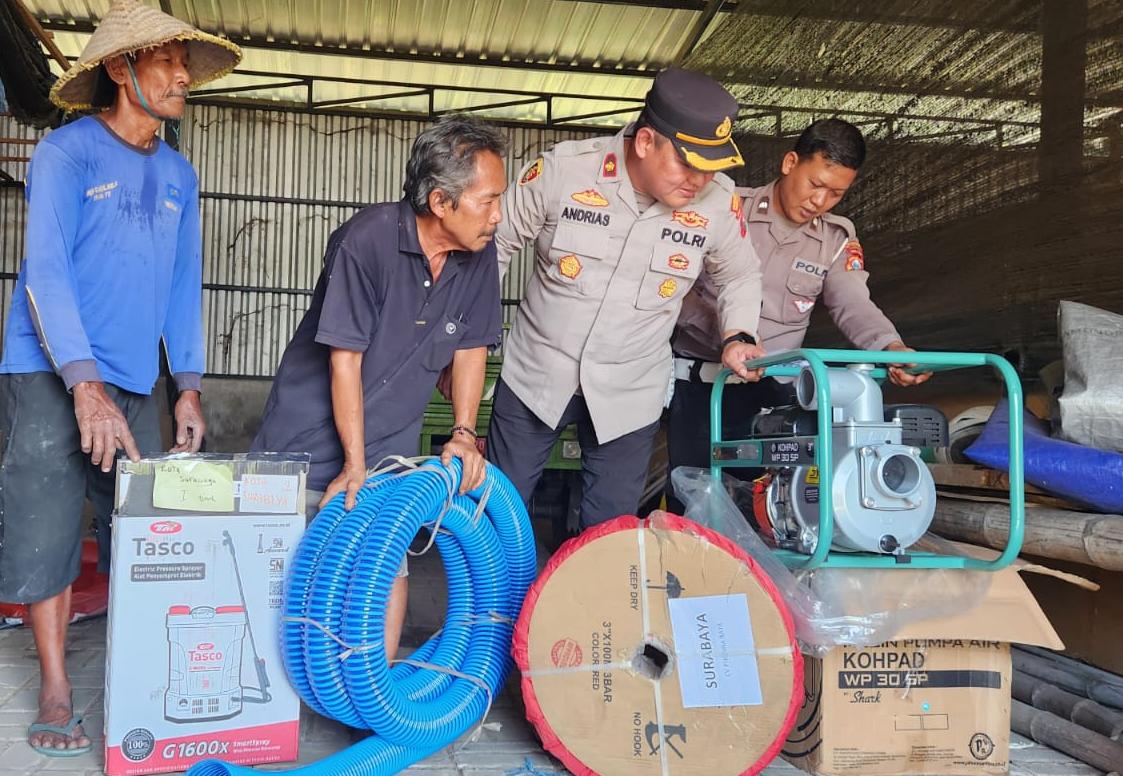
TANJUNG PERAK – Komitmen mendukung program ketahanan pangan nasional terus diwujudkan Polres Pelabuhan Tanjungperak Polda Jatim melalui berbagai langkah nyata di tengah masyarakat.
Salah satunya dengan mendampingi sekaligus menyalurkan bantuan sarana pertanian kepada Kelompok Tani (Poktan) Nandur Makmur di Kelurahan Tambak Wedi, Kecamatan Kenjeran, Kota Surabaya.
Kegiatan tersebut melibatkan personel penggerak ketahanan pangan Polsek Kenjeran bersama Penyuluh Pertanian Lapangan (PPL) Pertanian Kota Surabaya, sebagai bentuk kolaborasi lintas sektor dalam meningkatkan produktivitas pertanian dan memperkuat ketahanan pangan di wilayah pesisir Surabaya.
Kapolsek Kenjeran Kompol Yuyus melalui Kasi Humas Polres Pelabuhan Tanjung Perak, Iptu Suroto, menjelaskan peralatan yang disalurkan meliputi satu unit alat penyemprot hama manual, satu unit mesin penyedot air (alkon), satu selang spiral, serta satu selang air berukuran tiga inci dengan panjang 100 meter.
Bantuan tersebut diharapkan mampu membantu para petani dalam merawat tanaman jagung secara lebih efektif, terutama dalam memenuhi kebutuhan irigasi dan pengendalian hama saat musim kemarau yang berpotensi memengaruhi hasil panen.
“Melalui dukungan sarana pertanian ini, kami berharap para petani dapat bekerja lebih optimal sehingga produktivitas tanaman jagung meningkat,” ujar Iptu Suroto, Jumat (19/6/2026).
Ia mengatakan, kehadiran Polri bukan hanya menjaga keamanan, tetapi juga ikut berkontribusi dalam mendukung kesejahteraan masyarakat melalui sektor pertanian.
Iptu Suroto menambahkan, pendampingan kepada kelompok tani tidak berhenti pada penyaluran bantuan semata.
Personel penggerak ketahanan pangan bersama PPL akan terus melakukan pembinaan secara berkelanjutan guna memastikan pemanfaatan bantuan berjalan maksimal.
Pendampingan tersebut menjadi bagian dari upaya memperkuat kemampuan petani dalam mengelola lahan pertanian sekaligus meningkatkan hasil produksi sebagai kontribusi terhadap ketersediaan pangan di Kota Surabaya.
Sinergi antara Polres Pelabuhan Tanjung Perak, Polsek Kenjeran, Dinas Pertanian Kota Surabaya, Penyuluh Pertanian Lapangan, serta Kelompok Tani Nandur Makmur menjadi bukti bahwa keberhasilan program ketahanan pangan membutuhkan kerja sama seluruh elemen. (*)
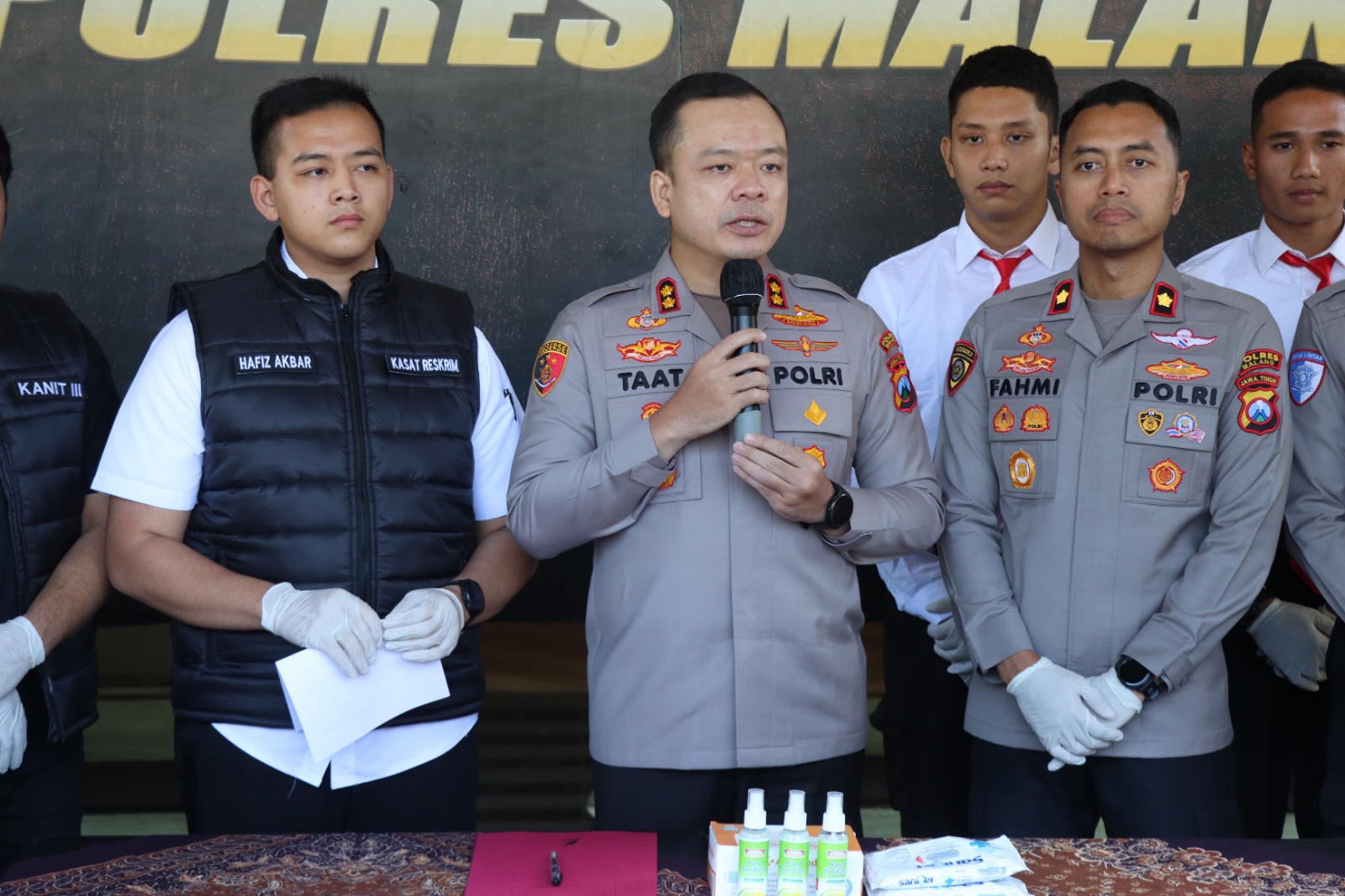
MALANG – Polres Malang Polda Jatim mengamankan dua pemuda yang kedapatan membawa senjata tajam (Sajam) saat kegiatan penyekatan pengamanan malam 1 Suro dan pengesahan warga baru salah satu perguruan pencak silat di Kabupaten Malang.
Keduanya kini telah ditetapkan sebagai tersangka dan ditahan di Rumah Tahanan Polres Malang Polda Jatim.
Dua tersangka tersebut masing-masing berinisial MAR (20), warga Kecamatan Pujon, Kabupaten Malang, dan RK (19), warga Kabupaten Malaka, Provinsi Nusa Tenggara Timur, yang sedang menempuh pendidikan di Malang.
Kapolres Malang AKBP Muhammad Taat Resdi mengatakan penangkapan dilakukan saat petugas menggelar penyekatan di Simpang Garuda, Karanglo, Kecamatan Singosari, pada Rabu (17/6/2026) dini hari.
Penyekatan dilakukan di sejumlah wilayah, di antaranya Kecamatan Sumberpucung, Lawang, Pakis, Dau, hingga Singosari, untuk mengantisipasi pergerakan massa yang berpotensi mengganggu keamanan dan ketertiban masyarakat.
“Ketika dilakukan pemeriksaan kendaraan dan badan, kami mendapati dua warga masyarakat membawa senjata tajam. Keduanya kemudian kami lakukan penindakan sesuai aturan hukum yang berlaku,” ujar AKBP Taat, Jumat (19/6/2026).
Selain mengamankan dua tersangka, Polisi juga menindak delapan sepeda motor yang kedapatan tidak dilengkapi surat-surat kendaraan saat berupaya menerobos penyekatan.
AKBP Taat menyebut penindakan tersebut merupakan bentuk komitmen Polres Malang dalam menjaga situasi keamanan dan ketertiban masyarakat selama rangkaian kegiatan malam 1 Suro.
“Ini menjadi wujud komitmen kami untuk senantiasa memelihara ketertiban dan keamanan masyarakat, khususnya dalam penyelenggaraan kegiatan yang berpotensi menimbulkan gangguan kamtibmas,” tegasnya. (*)
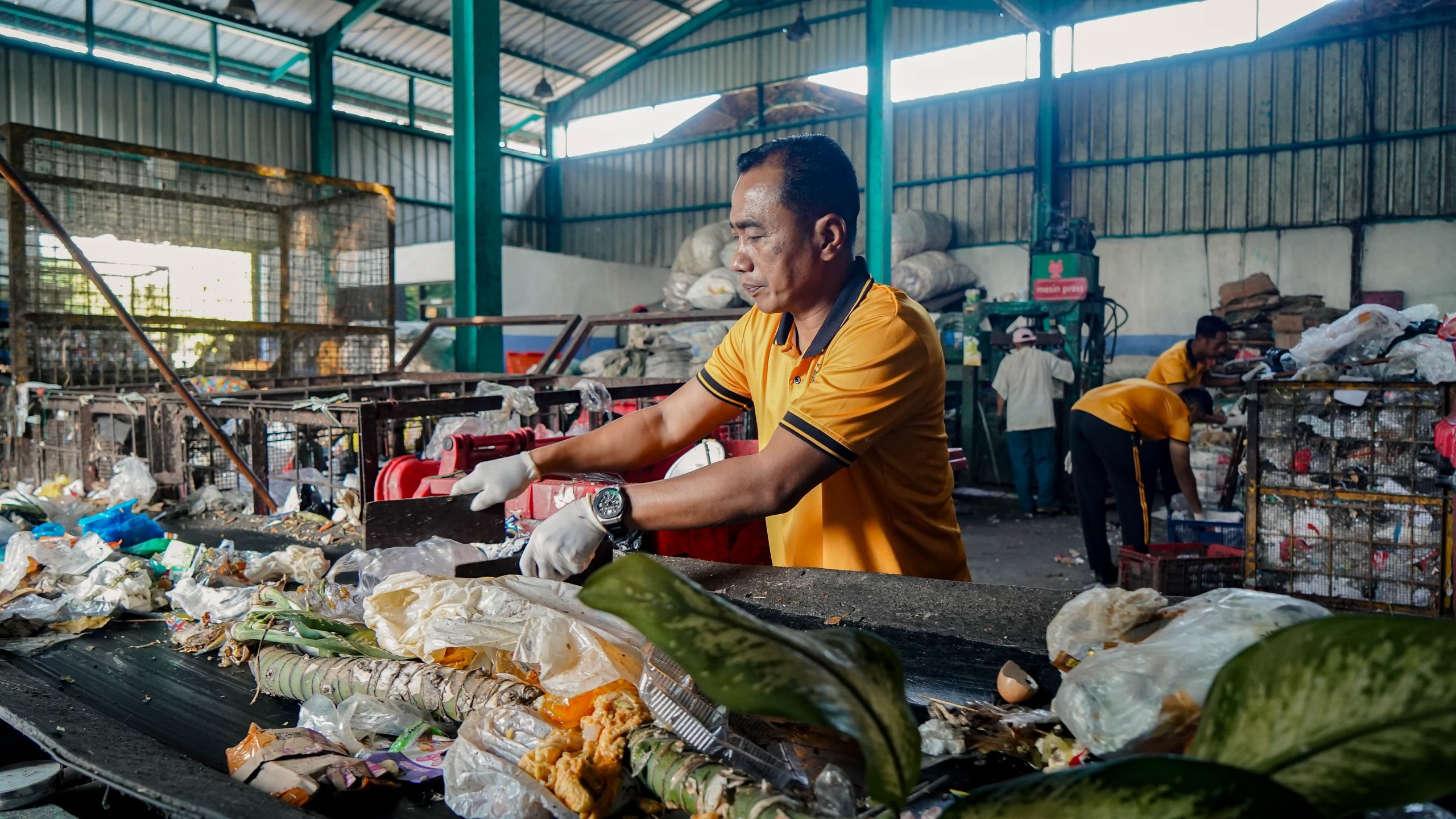
SURABAYA – Dalam rangka memperingati Hari Bhayangkara ke-80, Polda Jawa Timur melalui Direktorat Lalu Lintas menggelar kegiatan bakti sosial dan bakti religi yang berlangsung di dua lokasi berbeda di Kota Surabaya, Jumat (19/6/2026).
Kegiatan ini menjadi bagian dari wujud nyata kepedulian Polri kepada masyarakat sekaligus memperkuat semangat pengabdian dalam momentum peringatan Hari Bhayangkara.
Lokasi pertama dipusatkan di TPS 9 Jambangan Surabaya, di mana para personel turut berbaur bersama petugas kebersihan melaksanakan kegiatan daur ulang sampah sebagai bentuk kepedulian terhadap kebersihan lingkungan dan edukasi pengelolaan sampah.
Usai kegiatan bakti sosial, rombongan melanjutkan agenda bakti religi di Masjid Al-Hidayah.
Dalam kegiatan tersebut, personel Ditlantas bersama-sama membersihkan area masjid, mulai dari halaman hingga bagian dalam tempat ibadah guna menciptakan lingkungan yang bersih dan nyaman bagi masyarakat yang beribadah.
Sebagai bagian dari kepedulian sosial, Ditlantas Polda Jatim juga menyerahkan bantuan bingkisan sembako juga kepada petugas TPS dan pengurus atau takmir Masjid Al-Hidayah.
Direktur Lalu Lintas Kombes Pol Iwan Saktiadi mengatakan bahwa kegiatan sosial ini merupakan implementasi semangat Polri Presisi yang terus hadir di tengah masyarakat.
“Polri hadir di tengah masyarakat tidak hanya bertugas menjaga keamanan dan ketertiban masyarakat, tetapi juga melalui kegiatan kemanusiaan yang memberi manfaat langsung,” ujar Kombes Iwan.
Ia mengungkapkan bahwa kegiatan bakti sosial dan bakti religi ini merupakan bagian dari rangkaian peringatan Hari Bhayangkara ke-80.
“Kami ingin menunjukkan bahwa kehadiran Polri, khususnya Ditlantas Polda Jatim, tidak hanya berkaitan dengan pelayanan di bidang lalu lintas, tetapi juga hadir untuk membantu masyarakat melalui aksi nyata yang bermanfaat,” kata Kombes Pol Iwan Saktiadi.
Ia menambahkan bahwa momentum Hari Bhayangkara menjadi pengingat bagi seluruh anggota Polri untuk terus meningkatkan kepedulian sosial serta mempererat hubungan yang harmonis dengan masyarakat.
“Semangat Hari Bhayangkara ke-80 kami maknai sebagai penguatan pengabdian. Melalui kegiatan seperti ini, kami berharap dapat menumbuhkan solidaritas, memperkuat rasa empati, dan semakin mendekatkan Polri dengan masyarakat,” pungkasnya. (*)
-
 Berita3 tahun ago
Anggota Polsek Pohjentrek Rutin Patroli SPBU Serta Memberikan Himbauan ke Pembeli dan Petugas
-
 Berita3 tahun ago
Ajak Anggotanya Tingkatkan Harkamtibmas, Kapolsek Purworejo Gelar Coffe Morning
-
 Berita3 tahun ago
Langkah Kompolnas dan Divisi Humas Polri Bangun Sinergitas Berikan Pelayanan Terbaik Kepada Masyarakat
-
 Berita3 tahun ago
Jelang Libur Nataru, Polres Probolinggo Pastikan Keamanan dan Kenyamanan Obyek Wisata
-
 Berita2 tahun ago
Bhabinkamtibmas Polsek Purworejo Lakukan Pengamanan Jalan Santai Peringatan HUT Ke-79 Republik Indonesia
-
 Berita3 tahun ago
Polsek Grati Patroli Antisipasi Kamtibmas Jelang Idul Fitri
-
 Berita3 tahun ago
Dengan Sinergitas, Polres Pasuruan Kota Sukseskan Pengamanan Tour de Pasuruan dan Suropati Race IV 2023
-
 Berita3 tahun ago
Bhabinkamtibmas Polsek Grati Dialogis Dengan Masyarakat Desa Binaan Ciptakan Keamanan