
Berita
Ciptakan Kamtibmas Kondusif Jelang Nataru, Polres Trenggalek Gelar Penertiban Knalpot Brong


Trenggalek – Jajaran Kepolisian Resort Trenggalek menindak tegas sejumlah kendaraan yang tidak sesuai spesifikasi teknis (Spektek) dan menggunakan knalpot brong. Penertiban ini digelar dalam rangka menciptakan Kamseltibcarlantas yang kondusif di wilayah Kabupaten Trenggalek khususnya menjelang Natal dan Tahun Baru (Nataru). Jumat, (16/12).
Dikonfirmasi tim redaksi, Kapolres Trenggalek Polda Jatim AKBP Alith Alarino, S.I.K. melalui Kasihumas Iptu Suswanto, S.H. mengatakan beberapa lokasi yang menjadi sasaran penertiban ini diantaranya adalah ruas jalan Panglima Sudirman, jalan Soekarno-Hatta, lingkar alun-alun dan jalan Brigjen Soetran.
Tak berhenti disitu, petugas kepolisian juga menyisir lokasi lain yang berpotensi digunakan sebagai tempat balap liar mulai dari Siwalan, Ngadirenggo hingga Durenan dan Gandusari.
“Kegiatan kita laksanakan mulai pukul 24.00 Wib hingga menjelang subuh.” Ujar Iptu Suswanto.
Dalam penertiban ini lanjut Iptu Suswanto, melibatkan sedikitnya 50 personel gabungan dari berbagai satuan fungsi kepolisian. Keseluruhan personel kemudian dibagi menjadi beberapa tim kecil dengan wilayah sasaran yang berbeda.
Pihaknya menambahkan, cara bertindak yang dilakukan adalah dengan patroli mobile dan stationer, melakukan pengawasan dan pemantauan pada ruas jalas, edukasi kepada masyarakat serta menindak tegas pelanggar lalu lintas dengan tilang.
“Dari penertiban ini, ada 10 sepeda motor berknalpot brong yang diamankan. Kita Tilang.” Imbuhnya.
Lebih lanjut, Iptu Suswanto mengatakan, penertiban ini tidak akan berhenti sampai disini. Pihaknya menegaskan penertiban seperti ini akan terus dilakukan secara konsisten sehingga Kamseltibcarlantas jelang Nataru yang kondusif benar-benar bisa terwujud. (*)

Berita
Polsek Kraton Sosialisasikan Call Center 110, Wujudkan Pelayanan Polri yang Cepat dan Responsif

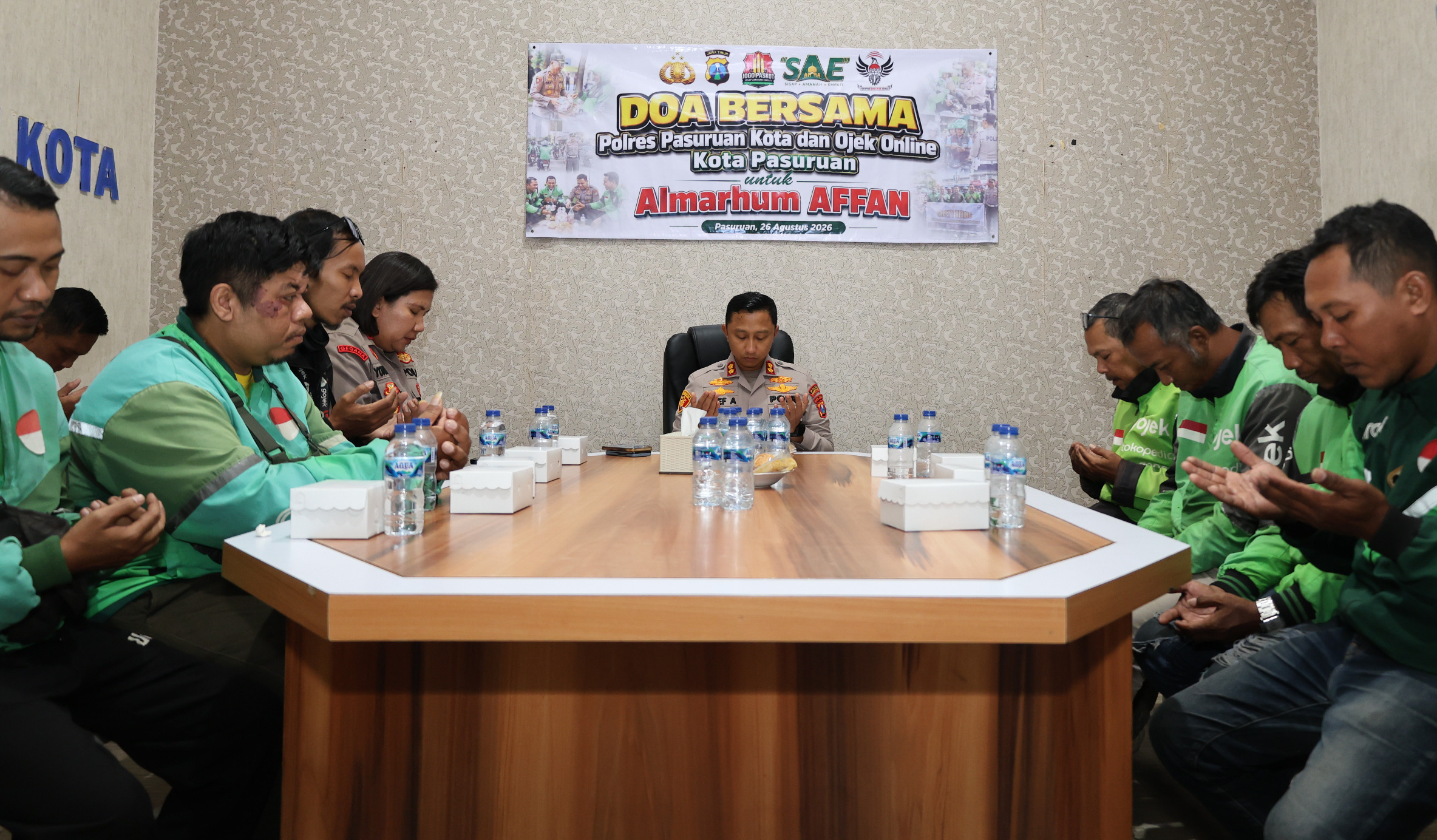
Polresta Pasuruan – Kapolres Pasuruan Kota AKBP Arief Ardiansyah Prasetya, S.I.K., S.H., M.H. bersama jajaran dan komunitas ojek online (ojol) se-Kota Pasuruan menggelar doa bersama untuk almarhum Affan, Rabu (26/8/2026).
Kegiatan yang berlangsung di Kantor Satlantas Polres Pasuruan Kota, Jalan Balaikota, Kelurahan Kandangsapi, Kecamatan Panggungrejo, Kota Pasuruan tersebut berlangsung khidmat dan penuh kekeluargaan.
Turut hadir Wakapolres Pasuruan Kota, Kasat Lantas Polres Pasuruan Kota, jajaran kepolisian serta perwakilan komunitas ojek online di Kota Pasuruan.
Dalam suasana penuh kebersamaan, seluruh peserta memanjatkan doa agar almarhum Affan mendapatkan tempat terbaik di sisi Allah SWT serta keluarga yang ditinggalkan diberikan kekuatan, ketabahan dan keikhlasan.
Kapolres menyampaikan rasa duka dan belasungkawa kepada keluarga almarhum. Menurutnya, doa bersama menjadi wujud kepedulian sekaligus ruang untuk saling menguatkan dalam suasana kekeluargaan.
“Semoga almarhum mendapatkan tempat terbaik di sisi Allah SWT dan keluarga yang ditinggalkan diberikan kekuatan serta ketabahan. Kami turut menyampaikan rasa duka dan belasungkawa yang mendalam,” ujar AKBP Arief.
Kapolres juga menyampaikan apresiasi atas kebersamaan yang selama ini terjalin antara kepolisian dan komunitas ojek online di Kota Pasuruan.
Ia berharap komunikasi dan hubungan baik tersebut dapat terus terjaga sebagai bagian dari kebersamaan seluruh elemen masyarakat dalam menciptakan suasana Kota Pasuruan yang aman, nyaman dan harmonis.
Kegiatan berlangsung sederhana dan penuh kekhidmatan. Para peserta mengikuti rangkaian doa bersama sebagai bentuk penghormatan dan kepedulian kepada almarhum serta keluarga yang ditinggalkan.
Melalui kegiatan tersebut, Polres Pasuruan Kota bersama komunitas ojek online menunjukkan semangat kebersamaan, kepedulian dan solidaritas dalam suasana penuh kekeluargaan.
Polres Pasuruan Kota berharap hubungan baik dengan berbagai elemen masyarakat, termasuk komunitas ojek online, terus terjalin melalui komunikasi, silaturahmi dan kebersamaan demi terciptanya kehidupan masyarakat yang aman, damai dan kondusif.
-
 Berita3 tahun ago
Anggota Polsek Pohjentrek Rutin Patroli SPBU Serta Memberikan Himbauan ke Pembeli dan Petugas
-
 Berita4 tahun ago
Ajak Anggotanya Tingkatkan Harkamtibmas, Kapolsek Purworejo Gelar Coffe Morning
-
 Berita4 tahun ago
Langkah Kompolnas dan Divisi Humas Polri Bangun Sinergitas Berikan Pelayanan Terbaik Kepada Masyarakat
-
 Berita3 tahun ago
Jelang Libur Nataru, Polres Probolinggo Pastikan Keamanan dan Kenyamanan Obyek Wisata
-
 Berita2 tahun ago
Bhabinkamtibmas Polsek Purworejo Lakukan Pengamanan Jalan Santai Peringatan HUT Ke-79 Republik Indonesia
-
 Berita3 tahun ago
Polsek Grati Patroli Antisipasi Kamtibmas Jelang Idul Fitri
-
 Berita3 tahun ago
Dengan Sinergitas, Polres Pasuruan Kota Sukseskan Pengamanan Tour de Pasuruan dan Suropati Race IV 2023
-
 Berita3 tahun ago
Bhabinkamtibmas Polsek Grati Dialogis Dengan Masyarakat Desa Binaan Ciptakan Keamanan