
Berita
Polres Bondowoso Canangkan Program Kultum, Tingkatkan Iman dan Taqwa Seluruh Anggota


Bondowoso, Dalam rangka meningkatkan iman dan takwa anggota, Mapolres Bondowoso, Polda Jatim menggelar program Kultum Sholat Dhuhur untuk meningkatkan iman dan taqwa seluruh anggota Polres Bondowoso di Masjid Polres Bondowoso, Senen (26/12 2022.)
Kegiatan Kultum tersebut merupakan rutinitas yang dilaksanakan oleh Polres Bondowoso Polda Jatim setiap hari setelah melaksanakan Sholat Dhuhur.
Kegiatan kultum diawali dengan sholat dhuhur berjamaah dilanjutkan imam memberikan kultum oleh KH. Ahmad Yusuf S. Hi pengasuh Ponpes Annasriyah.
Dalam kesempatan ini Kapolres Bondowoso AKBP Wimboko, SIK menjelaskan bahawa giat Kultum tersebut merupakan upaya dalam meningkatkan kualitas keimanan dan ketakwaan anggota Polres Bondowoso.
“Program Kultum Sholat Dhuhur ini sebagai wadah untuk membentuk karakter angggota Polri, khususnya anggota Polres Bondowoso, agar bisa meningkatkan kualitas iman dan takwa kepada Allah SWT,” ucap Kapolres.
Lebih lanjut AKBP Wimboko, SIK menambahkan, kegiatan semacam ini wajib diikuti, lantaran fungsinya dapat menyegarkan pikiran anggota yang setiap hari disibukkan dalam melaksanakan tugas.
Sebab, menurut Orang Nomer Satu di Jajaran Mapolres Bondowoso jika kegiatan ini bertujuan positif, memberikan siraman rohani bagi anggota Polres Bondowoso, dengan harapan mental anggota menjadi lebih baik sehingga dapat berimbas pada hasil pelaksanaan tugas anggota sehari-hari yang dapat dipertanggung jawabkan.
“Dengan begitu citra Polri akan semakin baik di mata masyarakat, himbauan kami kepada anggota ‘Tetap Semangat Demi melaksanakan dan menjadi Pelayan Masyarakat, ” pungkas Kapolres Bondowoso AKBP Wimboko, SIK.
(Humas)

Berita
Polsek Kraton Sosialisasikan Call Center 110, Wujudkan Pelayanan Polri yang Cepat dan Responsif

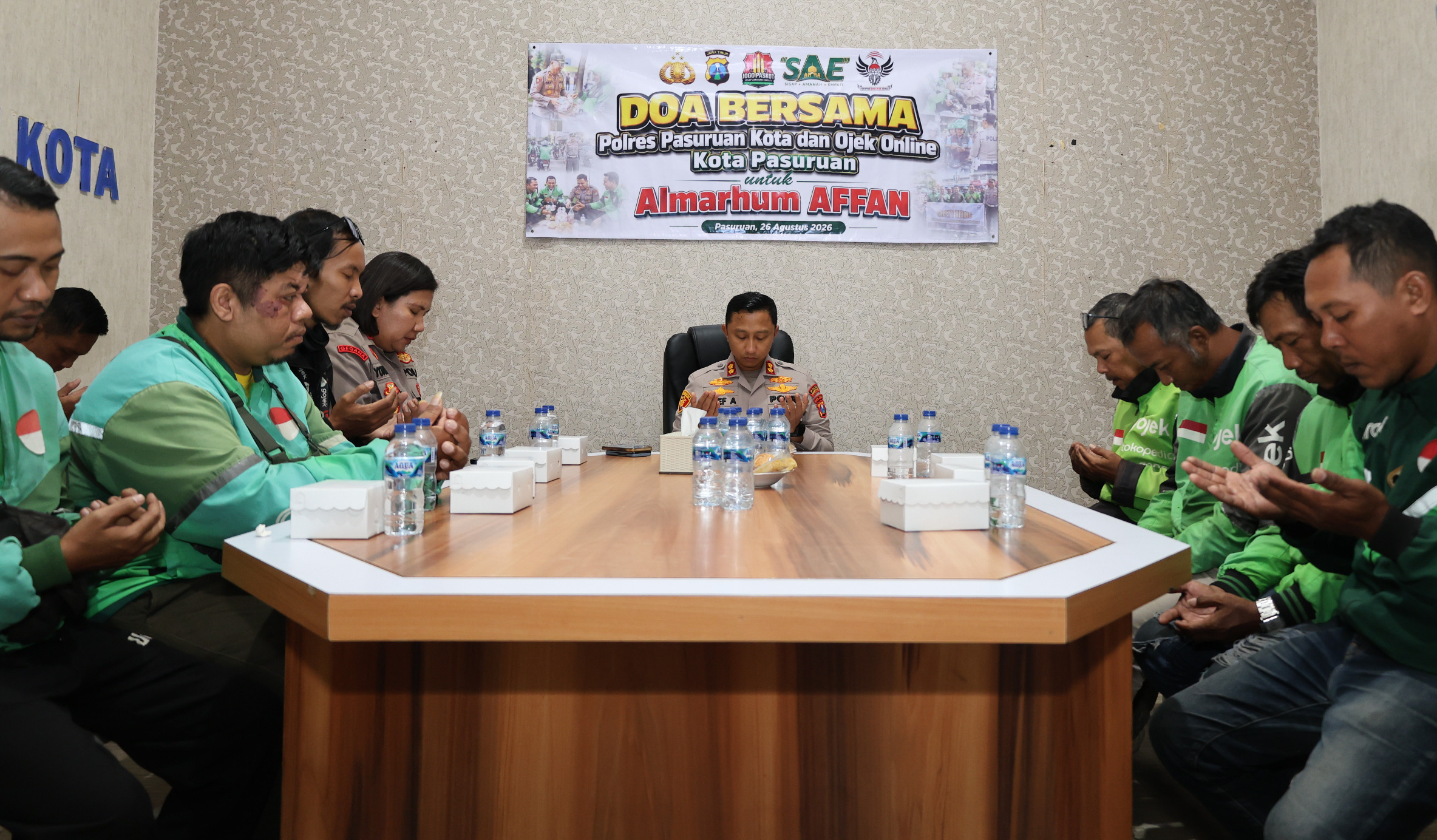
Polresta Pasuruan – Kapolres Pasuruan Kota AKBP Arief Ardiansyah Prasetya, S.I.K., S.H., M.H. bersama jajaran dan komunitas ojek online (ojol) se-Kota Pasuruan menggelar doa bersama untuk almarhum Affan, Rabu (26/8/2026).
Kegiatan yang berlangsung di Kantor Satlantas Polres Pasuruan Kota, Jalan Balaikota, Kelurahan Kandangsapi, Kecamatan Panggungrejo, Kota Pasuruan tersebut berlangsung khidmat dan penuh kekeluargaan.
Turut hadir Wakapolres Pasuruan Kota, Kasat Lantas Polres Pasuruan Kota, jajaran kepolisian serta perwakilan komunitas ojek online di Kota Pasuruan.
Dalam suasana penuh kebersamaan, seluruh peserta memanjatkan doa agar almarhum Affan mendapatkan tempat terbaik di sisi Allah SWT serta keluarga yang ditinggalkan diberikan kekuatan, ketabahan dan keikhlasan.
Kapolres menyampaikan rasa duka dan belasungkawa kepada keluarga almarhum. Menurutnya, doa bersama menjadi wujud kepedulian sekaligus ruang untuk saling menguatkan dalam suasana kekeluargaan.
“Semoga almarhum mendapatkan tempat terbaik di sisi Allah SWT dan keluarga yang ditinggalkan diberikan kekuatan serta ketabahan. Kami turut menyampaikan rasa duka dan belasungkawa yang mendalam,” ujar AKBP Arief.
Kapolres juga menyampaikan apresiasi atas kebersamaan yang selama ini terjalin antara kepolisian dan komunitas ojek online di Kota Pasuruan.
Ia berharap komunikasi dan hubungan baik tersebut dapat terus terjaga sebagai bagian dari kebersamaan seluruh elemen masyarakat dalam menciptakan suasana Kota Pasuruan yang aman, nyaman dan harmonis.
Kegiatan berlangsung sederhana dan penuh kekhidmatan. Para peserta mengikuti rangkaian doa bersama sebagai bentuk penghormatan dan kepedulian kepada almarhum serta keluarga yang ditinggalkan.
Melalui kegiatan tersebut, Polres Pasuruan Kota bersama komunitas ojek online menunjukkan semangat kebersamaan, kepedulian dan solidaritas dalam suasana penuh kekeluargaan.
Polres Pasuruan Kota berharap hubungan baik dengan berbagai elemen masyarakat, termasuk komunitas ojek online, terus terjalin melalui komunikasi, silaturahmi dan kebersamaan demi terciptanya kehidupan masyarakat yang aman, damai dan kondusif.
-
 Berita3 tahun ago
Anggota Polsek Pohjentrek Rutin Patroli SPBU Serta Memberikan Himbauan ke Pembeli dan Petugas
-
 Berita4 tahun ago
Ajak Anggotanya Tingkatkan Harkamtibmas, Kapolsek Purworejo Gelar Coffe Morning
-
 Berita4 tahun ago
Langkah Kompolnas dan Divisi Humas Polri Bangun Sinergitas Berikan Pelayanan Terbaik Kepada Masyarakat
-
 Berita3 tahun ago
Jelang Libur Nataru, Polres Probolinggo Pastikan Keamanan dan Kenyamanan Obyek Wisata
-
 Berita2 tahun ago
Bhabinkamtibmas Polsek Purworejo Lakukan Pengamanan Jalan Santai Peringatan HUT Ke-79 Republik Indonesia
-
 Berita3 tahun ago
Polsek Grati Patroli Antisipasi Kamtibmas Jelang Idul Fitri
-
 Berita3 tahun ago
Dengan Sinergitas, Polres Pasuruan Kota Sukseskan Pengamanan Tour de Pasuruan dan Suropati Race IV 2023
-
 Berita3 tahun ago
Bhabinkamtibmas Polsek Grati Dialogis Dengan Masyarakat Desa Binaan Ciptakan Keamanan