
Berita
Penekanan Kapolres Pasuruan Kota Dalam Apel Jam Pimpinan


Polresta Pasuruan – Apel jam pimpinan yang rutin dilaksanakan oleh Polres Pasuruan Kota pada setiap minggunya digelar di halaman gedung Wicaksana Laghawa Polres Pasuruan Kota, Senin (9/1/2023).
Apel Jam Pimpinan yang dihadiri oleh Pejabat Utama Polres, Kapolsek Jajaran, Para Perwira, anggota Bintara serta ASN Polri jajaran Polres Pasuruan Kota bertujuan untuk menyampaikan perkembangan situasi saat ini, rencana kegiatan serta mengevaluasi kegiatan pada minggu sebelumnya.
Dalam pelaksanaan apel jam pimpinan Kapolres Pasuruan Kota memberikan beberapa arahan serta tidak lupa mengucapkan selamat tahun baru 2023 dan terima kasih atas pelaksanaan tugas seluruh personil selama satu tahun kemarin yang mana situasi Kamtibmas di Wilayah hukum Polres Pasuruan Kota selalu aman dan kondusif.
“Semoga dengan semangat tahun baru ini kita diberikan kesehatan, diberikan kebahagiaan, kelancaran untuk melaksanakan tugas sebagai anggota Polri tentunya diberikan keselamatan, kesuksesan di dunia dan akherat”, ujar Kapolres mengawali sambutannya.
“Disampaikan terima kasih dari Habib Taufiq selaku ketua Robito Alawiyah Nasional kepada Polres Pasuruan Kota yang telah mengamankan jalannya haul Habib Ja’far Assegaf yang dilaksanakan pada hari Sabtu dan Minggu kemarin Alhamdulillah berjalan aman dan kondusif”. lanjut Kapolres.
Adapun penekanan kapolres agar kebijakan Bapak Kapolda Jawa Timur harus kita dukung diantaranya telah menciptakan beberapa aplikasi digital dalam menunjang kinerja anggota kepolisian khususnya di bawah naungan Polda Jawa Timur dengan adanya e-office dan e-absensi hal tersebut justru memudahkan kita dalam melaksanakan tugas di lapangan.
Dalam amanatnya AKBP Jauhari mengantisipasi di tahun 2023 sudah mulai menghadapi rangkaian Pemilu serentak Tahun 2024 agar dipersiapkan dengan matang supaya seluruh rangkaian tahapan pemilu dapat berjalan aman.
“Kepada seluruh anggota jaga kekompakan hindari pelanggaran karena sudah banyak wa maupun SMS yang masuk ke saya terkait adanya pelanggaran-pelanggaran anggota di lapangan baik KDRT penyalahgunaan wewenang maupun pungli di luar ketentuan. Tutup Kapolres dalam amanatnya.

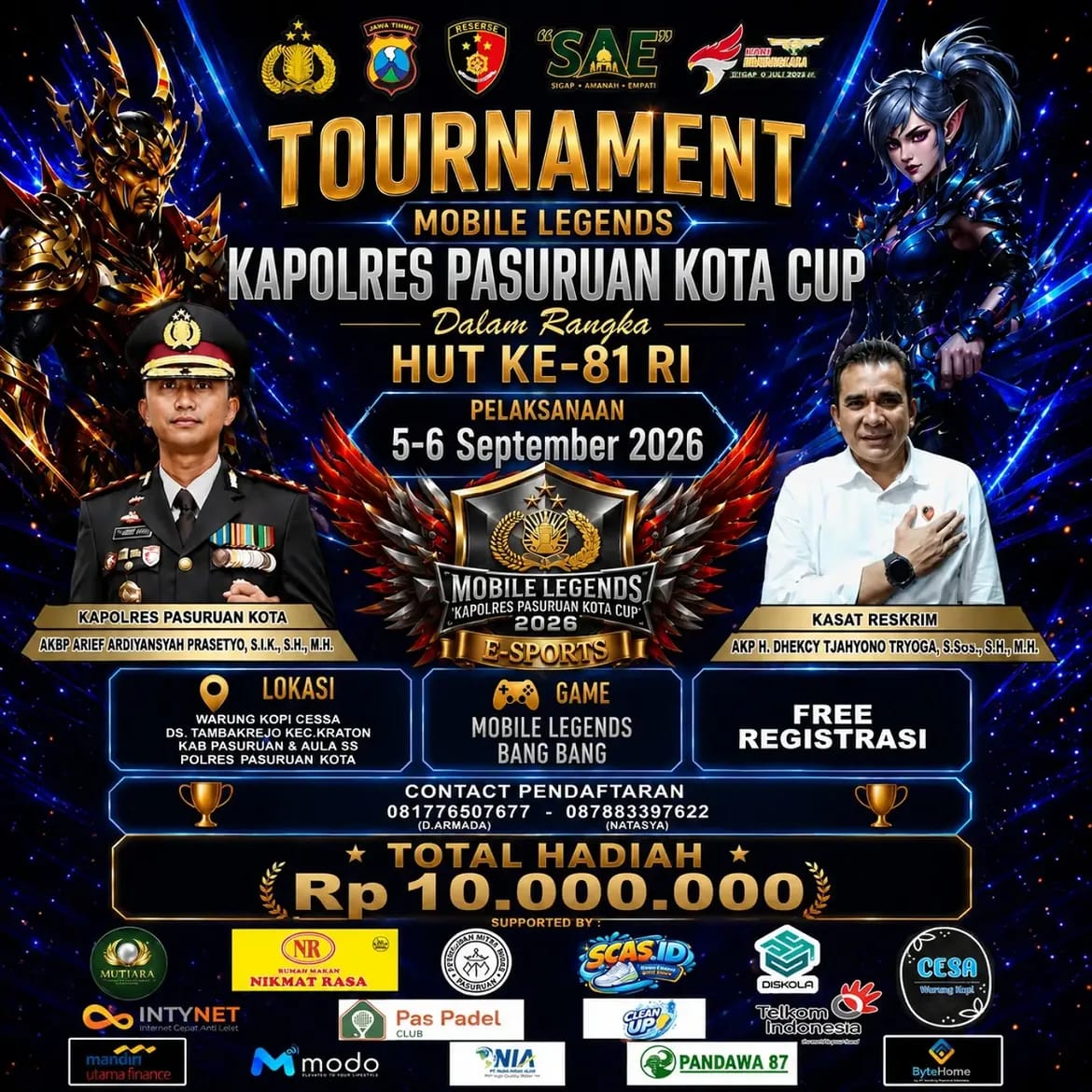
Polresta Pasuruan – Dalam rangka memeriahkan Hari Ulang Tahun (HUT) ke-81 Republik Indonesia, Polres Pasuruan Kota akan menggelar Tournament Mobile Legends: Bang Bang Kapolres Pasuruan Kota Cup 2026. Sabtu (29/8/2026)
Turnamen e-sports ini menjadi wadah bagi para pecinta Mobile Legends untuk menunjukkan kemampuan, strategi, serta kekompakan tim dalam sebuah kompetisi yang positif dan menjunjung tinggi sportivitas.
Kapolres Pasuruan Kota AKBP Arief Ardiansyah Prasetyo, S.I.K., S.H., M.H., mengatakan kegiatan tersebut diharapkan dapat menjadi ruang positif bagi generasi muda untuk menyalurkan minat dan bakat di bidang e-sports.
“Kami ingin memberikan ruang bagi generasi muda untuk menyalurkan minat dan bakatnya melalui kegiatan yang positif. Selain berkompetisi, kami berharap turnamen ini dapat mempererat silaturahmi dan membangun sportivitas,” ujar Kapolres.
Kapolres Pasuruan Kota Cup 2026 mempertandingkan game Mobile Legends: Bang Bang dengan format satu tim terdiri dari lima peserta. Menariknya, pendaftaran peserta tidak dipungut biaya atau gratis, dengan total hadiah yang disiapkan mencapai Rp10 juta.
Pendaftaran turnamen telah dibuka mulai 28 Agustus 2026. Selanjutnya, Technical Meeting (TM) akan dilaksanakan pada 4 September 2026.
Rangkaian pertandingan dimulai pada 5 September 2026 dengan babak penyisihan yang berlangsung di Warung Kopi Cesa, Desa Tambakrejo, Kecamatan Kraton, Kabupaten Pasuruan.
Sementara itu, babak semifinal dan final dijadwalkan berlangsung pada 6 September 2026 di Aula SS Polres Pasuruan Kota.
Kasat Reskrim Polres Pasuruan Kota AKP H. Dhecky Tjahyono Try Yoga, S.Sos., S.H., M.H., mengajak para pecinta Mobile Legends untuk segera mendaftarkan tim terbaiknya dan mengikuti kompetisi tersebut.
“Kuota peserta terbatas. Kami mengajak para komunitas dan pecinta Mobile Legends untuk ikut ambil bagian dalam Kapolres Pasuruan Kota Cup 2026. Mari berkompetisi secara sehat, junjung sportivitas, dan tunjukkan kemampuan terbaik,” ungkapnya.
Bagi masyarakat yang ingin mengikuti turnamen, pendaftaran dapat dilakukan melalui kontak D. Armada di nomor 081776507677 atau Natasya di nomor 087883397622.
Melalui kegiatan ini, Polres Pasuruan Kota berharap e-sports dapat menjadi sarana positif untuk membangun kreativitas, kebersamaan, dan sportivitas generasi muda sekaligus turut memeriahkan HUT ke-81 Republik Indonesia.
Siap tempur? Siap jadi juara? Mari ramaikan Kapolres Pasuruan Kota Cup 2026!
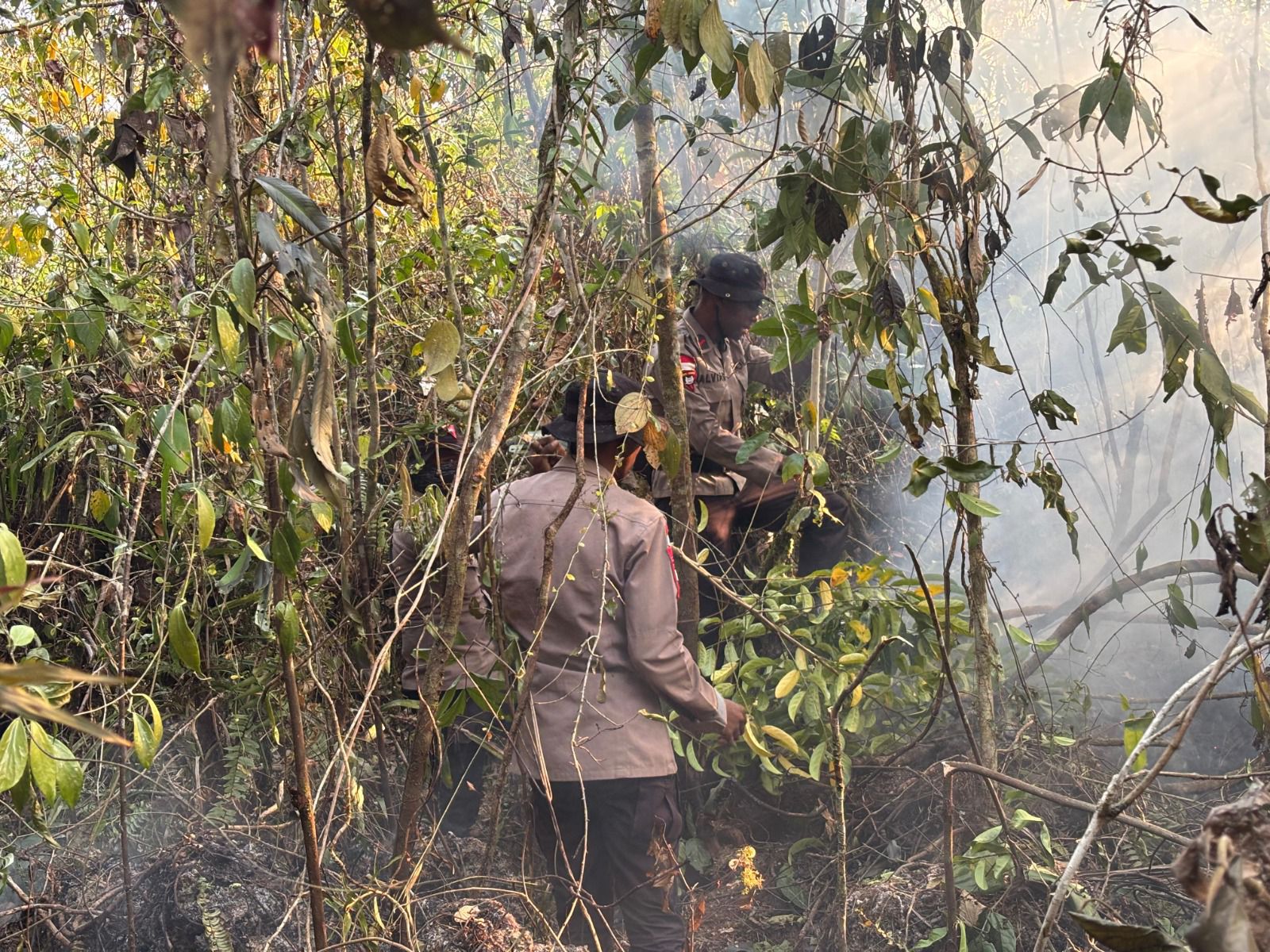
BIAK – Memasuki hari keenam penanganan kebakaran hutan dan lahan (Karhutla) di Kabupaten Biak Numfor, personel Kompi 4 Batalyon A Pelopor Satbrimob Polda Papua kembali melaksanakan penanganan di sejumlah lokasi. Kegiatan dilakukan di Kampung Darfuar, belakang Pasar Maryendi, serta Kampung Sumberker, Jalan Raya Biak Timur, dengan dukungan satu unit Water Cannon.
Personel melaksanakan pemadaman dan pembasahan pada area yang masih terdapat titik api maupun bara sisa kebakaran. Penggunaan Water Cannon membantu proses penyiraman di lokasi terdampak sehingga penanganan dapat dilakukan secara lebih efektif. Personel juga menyisir area sekitar untuk memastikan api tidak kembali muncul dan mencegah kobaran menyebar ke wilayah lainnya.
Karo Penmas Divhumas Polri Brigjen Pol. Trunoyudo Wisnu Andiko mengatakan, Polri terus mengoptimalkan langkah penanganan Karhutla dengan mengerahkan personel dan sarana pendukung di wilayah yang masih terdapat titik api. Menurutnya, upaya pemadaman tidak hanya dilakukan untuk mengendalikan api, tetapi juga memastikan bara sisa kebakaran tidak kembali memicu munculnya titik api baru.
“Polri terus mengoptimalkan penanganan Karhutla dengan mengerahkan personel dan sarana yang dimiliki, termasuk melakukan pemadaman dan pembasahan di lokasi yang masih terdapat titik api maupun bara. Langkah ini dilakukan untuk memastikan api benar-benar terkendali dan mencegah kebakaran meluas,” kata Trunoyudo dalam keterangan tertulis di Jakarta, Sabtu (29/8/2026).
Selama kegiatan berlangsung, personel terus melakukan pemantauan terhadap kondisi di masing-masing lokasi penanganan. Proses pemadaman dilakukan secara bertahap dengan memperhatikan kondisi medan serta keselamatan personel. Setelah titik api berhasil dikendalikan, pembasahan tetap dilakukan untuk memastikan bara yang tersisa benar-benar padam dan tidak menimbulkan kembali titik api baru.
Memasuki hari keenam, personel Kompi 4 Batalyon A Pelopor tetap menunjukkan kesiapsiagaan dalam menangani Karhutla di wilayah Kabupaten Biak Numfor. Penanganan dan pemantauan akan terus dilakukan untuk memastikan kondisi lokasi aman.
“Penanganan di lapangan akan terus dilakukan secara berkelanjutan dengan tetap mengutamakan keselamatan personel dan masyarakat. Kami juga mengimbau masyarakat untuk bersama-sama mencegah terjadinya Karhutla dengan tidak melakukan aktivitas yang dapat memicu kebakaran, khususnya pembakaran lahan secara sembarangan,” ujarnya.
Langkah tersebut merupakan bentuk respons Satbrimob Polda Papua dalam membantu penanganan Karhutla sekaligus mencegah dampaknya meluas ke wilayah lainnya.
Berita
Bhayangkara Sprint Rally 2026 di Pasuruan, Polda Jatim Tekankan Fair Play dan Keselamatan Berlalu Lintas



PASURUAN – Kejuaraan Nasional (Kejurnas) Bhayangkara Sprint Rally 2026 Putaran ke-3 resmi digelar di Sirkuit Horse Racing Ki Ageng Astro Joyo, Kejayan, Kabupaten Pasuruan, Jawa Timur, Sabtu (29/8/2026).
Kejuaraan otomotif yang dibuka Kapolda Jawa Timur Irjen Pol Nanang Avianto tersebut diikuti 100 pembalap dari berbagai daerah di Indonesia yang bersaing dalam 15 kelas kompetisi.
Kabid Humas Polda Jatim Kombes Pol Jules Abraham Abast mengatakan, Bhayangkara Sprint Rally tidak sekadar menjadi arena kompetisi dan adu kecepatan, tetapi juga membawa pesan tentang sportivitas, disiplin dan keselamatan berlalu lintas.
“Bhayangkara Sprint Rally 2026 Putaran ke-3 ini bukan hanya menjadi ajang kompetisi otomotif nasional, tetapi juga menjadi ruang untuk membangun sportivitas, kebersamaan dan budaya keselamatan berlalu lintas,” kata Kombes Pol Abast.
Menurut Kombes Pol Abast, para pembalap tentu diharapkan mampu menunjukkan kemampuan terbaiknya selama berada di lintasan. Namun, sportivitas dan keselamatan harus tetap menjadi hal yang utama.
“Ada 100 pembalap yang mengikuti 15 kelas kompetisi. Kita berharap seluruh peserta dapat memberikan penampilan terbaik dengan tetap menjunjung tinggi fair play dan mengutamakan keselamatan,” ujar Kombes Abast.
Ia menegaskan, kemampuan dan kecepatan dalam olahraga otomotif harus ditempatkan pada ruang yang tepat, yakni lintasan atau sirkuit.
Pesan tersebut dinilai penting, tidak hanya bagi para pembalap dan komunitas otomotif, tetapi juga bagi masyarakat, khususnya generasi muda.
“Kecepatan dan kemampuan harus ditempatkan pada tempatnya, yaitu di lintasan atau sirkuit. Ketika berada di jalan raya, kita semua wajib tertib, santun dan mematuhi aturan lalu lintas,” tegas Kombes Abast.
Selain menjadi ajang olahraga otomotif nasional, penyelenggaraan Bhayangkara Sprint Rally 2026 juga diharapkan memberikan dampak positif bagi aktivitas ekonomi masyarakat di Pasuruan dan sekitarnya.
Kehadiran pembalap, tim, ofisial maupun masyarakat yang menyaksikan kejuaraan turut menggerakkan berbagai sektor, mulai dari perhotelan, UMKM, kuliner hingga pariwisata.
“Kegiatan ini juga memberikan dampak positif bagi masyarakat. Kehadiran peserta, tim maupun masyarakat yang menyaksikan kejuaraan turut menggerakkan sektor perhotelan, UMKM, kuliner dan pariwisata di Pasuruan dan sekitarnya,” ungkap Kombes Pol Abast.
Ia berharap Kejurnas Bhayangkara Sprint Rally dapat semakin memperkuat sinergi antara Polri, komunitas otomotif dan masyarakat sekaligus menjadi sarana menggelorakan budaya tertib berlalu lintas.
“Kami berharap seluruh rangkaian kegiatan berlangsung aman dan lancar serta memberikan manfaat bagi masyarakat. Dan yang terpenting, semangat berkompetisi cukup kita tunjukkan di lintasan. Di jalan raya, keselamatan dan kepatuhan terhadap aturan harus menjadi yang utama,” pungkas Kombes Pol Abast. (*)
-
 Berita3 tahun ago
Anggota Polsek Pohjentrek Rutin Patroli SPBU Serta Memberikan Himbauan ke Pembeli dan Petugas
-
 Berita4 tahun ago
Ajak Anggotanya Tingkatkan Harkamtibmas, Kapolsek Purworejo Gelar Coffe Morning
-
 Berita4 tahun ago
Langkah Kompolnas dan Divisi Humas Polri Bangun Sinergitas Berikan Pelayanan Terbaik Kepada Masyarakat
-
 Berita3 tahun ago
Jelang Libur Nataru, Polres Probolinggo Pastikan Keamanan dan Kenyamanan Obyek Wisata
-
 Berita2 tahun ago
Bhabinkamtibmas Polsek Purworejo Lakukan Pengamanan Jalan Santai Peringatan HUT Ke-79 Republik Indonesia
-
 Berita3 tahun ago
Polsek Grati Patroli Antisipasi Kamtibmas Jelang Idul Fitri
-
 Berita3 tahun ago
Dengan Sinergitas, Polres Pasuruan Kota Sukseskan Pengamanan Tour de Pasuruan dan Suropati Race IV 2023
-
 Berita3 tahun ago
Bhabinkamtibmas Polsek Grati Dialogis Dengan Masyarakat Desa Binaan Ciptakan Keamanan