
Berita
Kompak, Polisi di Ponorogo bersama TNI dan Warga Bedah Rumah Mbah Ponirah yang Hidup Sebatangkara


PONOROGO – Hidup sebatangkara diusia senja dan tinggal dirumah yang tak layak huni, Mbah Ponirah (85) hanya bisa pasrah dengan keadaan.
Melihat kondisi yang seperti itu, Polres Ponorogo melalui Polsek Somoroto,Koramil Kauman dan Pemerintah Desa serta Karang Taruna berinisiatif mengajak berbagai elemen masyarakat dan instansi samping untuk bekerja bakti merenovasi rumah Mbah Ponirah.
Diawali dengan mengevakuasi barang – barang didalam rumah, peserta kerja bakti melanjutkannya dengan membuat adonan semen yang digunakan untuk merabat lantai rumah, dimana semula lantai rumah Mbah Ponirah masih berupa tanah.
Selesai merabat lantai dari ruang belakang, ruang kamar sampai ke teras, kerja bakti dilanjutkan dengan pengecatan tembok, hal ini dilakukan agar rumah tidak terlalu lembab dan berdebu, sehingga sirkulasi udara lebih bersih.
Kapolsek Somoroto, Kompol Beny Hartono, S.H. mengatakan kegiatan bakti sosial yang dilakukannya adalah Sebagian dari wujud kehadiran Polri di tengah masyarakat.
“Kami berpartisipasi dalam kegiatan kerja bakti ini bersinergi bersama rekan – rekan TNI,Pemerintah Desa dan warga yang tergabung dalam Karang Taruna Desa Somoroto”, ujar Kompol Beny Hartono, S.H di sela – sela kegiatan bedah rumah,Selasa (10/1).
Ia berharap semoga mbok Ponirah selalu di berikan kesehatan diusia senjanya, bisa menikmati sisa sisa hidupnya dengan nyaman di rumah yang baru saja di renovasi dan dibersihkan ini.
“Saya salut dengan kekompakan karang taruna dan warga sekitar dalam merenovasi rumah Mbah Ponirah, semoga menjadi amal kebaikan untuk semua yang bisa membantu Mbah Ponirah agar bisa tinggal ditempat yang layak disisa hidupnya”, pungkas Kapolsek Somoroto. (*)

Berita
Operasi Tumpas Narkoba 2026, Polres Pelabuhan Tanjung Perak Amankan 27 Tersangka dan Sita 1 Kilogram Sabu

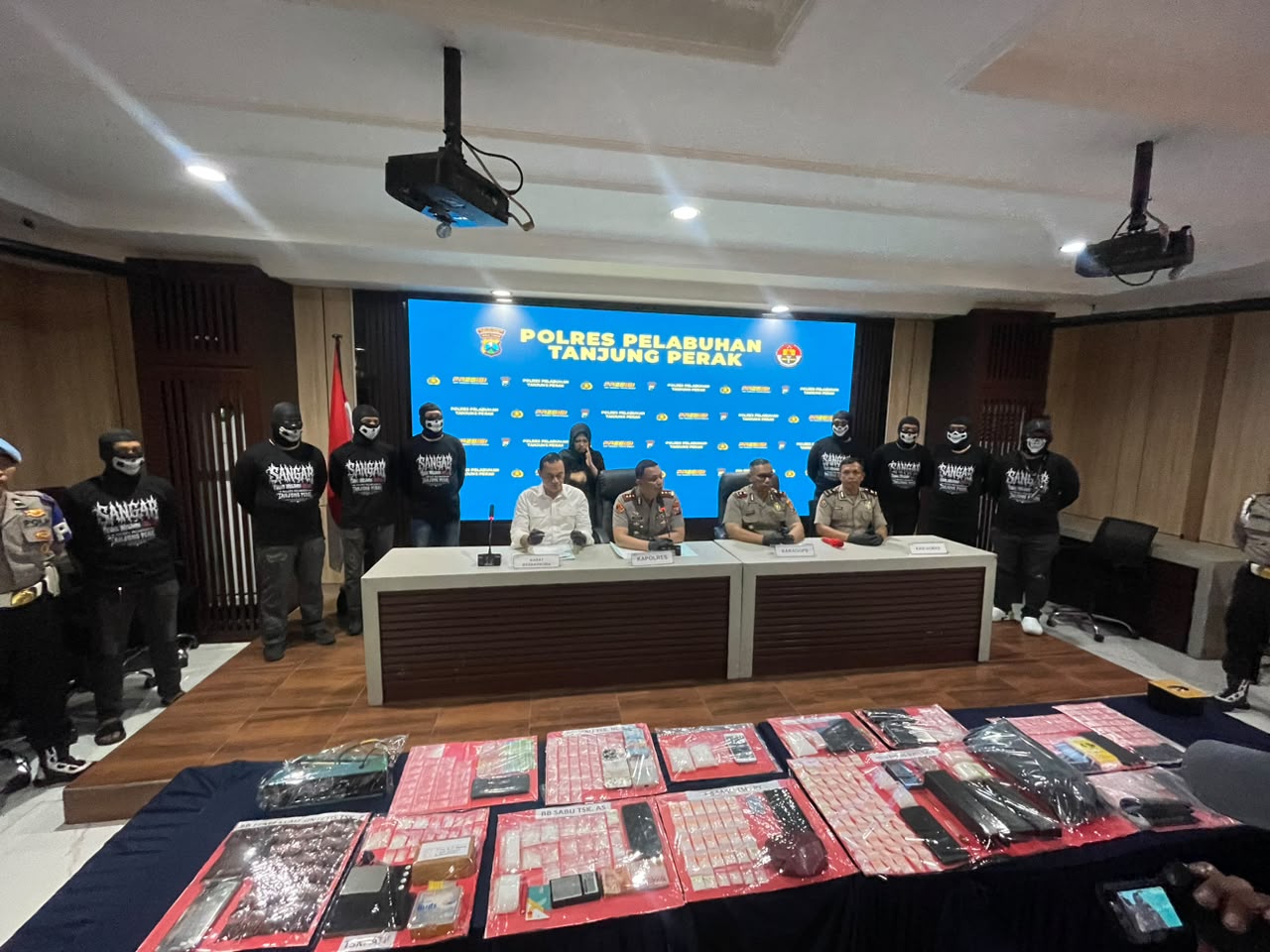
SURABAYA – Polres Pelabuhan Tanjung Perak Polda Jatim berhasil mengungkap 23 kasus narkotika selama Operasi Tumpas Narkoba Semeru 2026.
Dalam operasi yang berlangsung selama 12 hari itu, Polisi menangkap 27 tersangka dan menyita lebih dari satu kilogram sabu.
Kapolres Pelabuhan Tanjung Perak AKBP Irwan Kurniawan didampingi Kasatnarkoba AKP Adik Agus Putrawan mengatakan,pada operasi yang digelar hingga 23 Agustus 2026 di seluruh wilayah hukum Polres Pelabuhan Tanjung Perak terdapat 23 laporan Polisi yang ditangani.
“Dari 23 laporan yang kami tangani, penyidik menetapkan 27 orang sebagai tersangka terdiri dari 24 laki-laki dan Tiga perempuan,” ujar AKBP Irwan, Selasa (25/8/2026).
Dari pengungkapan tersebut selain mengamankan 27 tersangka dan sabu seberat 1.010,29 gram atau sekitar 1,01 kilogram, Polisi juga menyita tembakau sintetis seberat 148,99 gram.
Barang bukti lainnya berupa 26 telepon seluler, sembilan timbangan elektrik, satu kendaraan Runmore R2, uang tunai Rp.9.170.000, 13 panel plastik klip kosong, serta satu alat press yang diduga digunakan dalam aktivitas peredaran narkotika.
Jika dihitung berdasarkan estimasi harga Rp1,2 juta per gram, nilai sabu yang disita mencapai sekitar Rp1,212 miliar.
AKBP Irwan menyatakan, keberhasilan operasi kali ini tidak sekadar dilihat dari jumlah perkara maupun tersangka.
Ia menegaskan, yang lebih penting dalam operasi tersebut adalah peredaran narkotika berhasil dicegah dan ribuan masyarakat dapat diselamatkan dari bahaya Narkoba.
“Kalau kita konversikan, apabila satu gram ini dikonsumsi oleh 10 orang, maka kita bisa menyelamatkan sebanyak 10.000 jiwa,” ungkap AKBP Irwan.
Ia juga menegaskan pemberantasan narkotika merupakan bagian dari upaya menjaga keamanan masyarakat di wilayah hukum Polres Pelabuhan Tanjung Perak. Komitmen itu salah satunya diwujudkan melalui program “Jogo Perak”.
“Jogo Perak berarti kami jogo wilayahnya, kami jogo masyarakatnya,” tegas AKBP Irwan.
Ia juga meminta masyarakat ikut berperan dalam memutus mata rantai peredaran narkotika.
“Apabila memiliki informasi ataupun hal-hal yang berkaitan dengan tindak pidana narkoba, bisa menyampaikan kepada kami melalui layanan Call Center 110 bebas pulsa, supaya kita bersama-sama bersinergi dan berkomitmen,” pungkas AKBP Irwan.
Sementara itu, Kasatresnarkoba Polres Pelabuhan Tanjung Perak,AKP Adik Agus Putrawan menerangkan, dari total 27 tersangka yang diringkus tersebut memiliki peran yang bervariasi dalam mata rantai peredaran ini.
“Peran tersangka yang kami amankan mulai dari pengguna, kurir lapangan, hingga pengedar tingkat menengah,” kata AKP Adik.
Menurut AKP Adik, seluruh tersangka saat ini sudah ditahan di Mapolres Pelabuhan Tanjung Perak guna menjalani proses penyidikan dan pengembangan lebih lanjut.
Para tersangka dijerat Pasal 114 ayat (1) dan ayat (2) Undang-Undang Nomor 35 Tahun 2009 tentang Narkotika, dengan ketentuan pidana subsidair sesuai hasil penyidikan. (*)
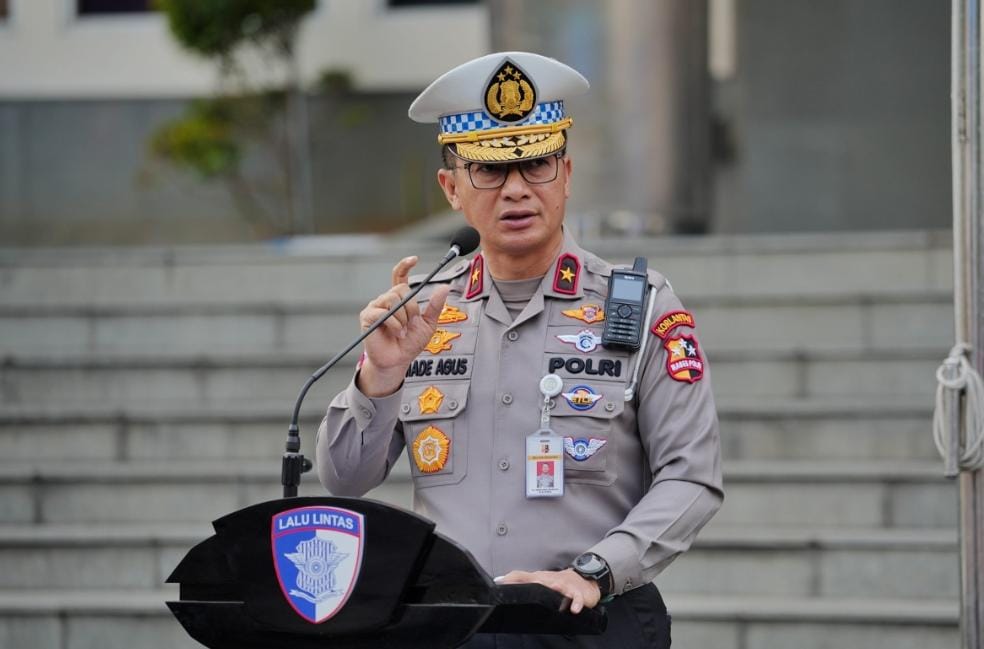
JOMBANG – Korps Lalu Lintas (Korlantas) Polri bersama Direktorat Lalu Lintas (Ditlantas) Polda Jawa Timur memperkuat pengamanan arus lalu lintas di Kabupaten Jombang Jawa Timur, menjelang pembukaan Muktamar ke-35 Nahdlatul Ulama (NU) yang dijadwalkan berlangsung pada 27 hingga 31 Agustus 2026.
Langkah strategis ini diambil guna mengantisipasi lonjakan volume kendaraan seiring kedatangan ribuan ulama, delegasi, dan penggembira dari berbagai penjuru tanah air menuju pusat kegiatan di Pondok Pesantren Bahrul Ulum Tambakberas, Jombang.
Direktur Penegakan Hukum (Dirgakkum) Korlantas Polri, Brigjen Pol I Made Agus Prasatya mengatakan, pengamanan tidak hanya fokus pada kelancaran perjalanan peserta muktamar, tetapi juga menjaga keamanan, keselamatan, ketertiban dan kelancaran lalu lintas (Kamseltibcarlantas) bagi masyarakat umum.
“Pada kegiatan Muktamar NU ini, Kamseltibcarlantas menjadi atensi kita bersama,”ujar Brigjen Pol I Made Agus, Senin (24/8/2026).
Korlantas Polri juga mendorong jajaran kewilayahan khususnya Direktorat Lalu Lintas Polda Jawa Timur untuk mempersiapkan personel serta pola pengaturan lalu lintas secara matang.
Hal tersebut diperlukan agar peningkatan aktivitas kendaraan tidak menimbulkan kemacetan panjang maupun menganggu mobilitas masyarakat sekitar.
“Kegiatan kita tidak hanya mengatur kendaraan rombongan peserta Muktamar, tetapi juga memastikan masyarakat dapat beraktivitas tanpa terganggu oleh peningkatan arus kendaraan yang mungkin akan terjadi,” tegas Brigjen Pol I Made Agus.
Korlantas Polri juga menempatkan aspek keselamatan sebagai bagian penting dalam pengamanan.
Brigjen Pol I Made Agus menegaskan, pengamanan lalu lintas tidak semata – mata dilakukan untuk mengatur kendaraan.
Menurut Brigjen Pol I Made Agus, kehadiran personel juga menjadi bagian dari pelayanan kepolisian kepada masyarakat yang membutuhkan informasi dan bantuan terutama saat terjadi kepadatan lalu lintas.
“Penguatan pengamanan lalu lintas ini sekaligus menjadi bagian dari kesiapan Polri menyambut salah satu agenda besar NU tahun ini,” pungkas Brigjen Pol I Made Agus. (*)
Jakarta — Polri mengerahkan sebanyak 403 personel sebagai Satgas Edukasi untuk mendukung upaya pencegahan kebakaran hutan dan lahan (karhutla) di sejumlah wilayah. Kegiatan tersebut merupakan tindak lanjut petunjuk Kapolri Jenderal Polisi Drs. Listyo Sigit Prabowo dalam rangka memperkuat langkah pencegahan karhutla melalui edukasi dan pendekatan kepada masyarakat.
Pelaksanaan kegiatan berada di bawah koordinasi Lemdiklat Polri bersama Stamaops Polri. Para personel akan ditugaskan ke delapan wilayah hukum Polda, yakni Kalimantan Barat, Kalimantan Tengah, Kalimantan Timur, Kalimantan Selatan, Kalimantan Utara, Sumatera Selatan, Riau, dan Jambi.
Dari total 403 personel, sebanyak 8 personel merupakan pendamping atau pimpinan yang terdiri dari 6 Patun S2-STIK Lemdiklat Polri, 1 Kabid Pengsos Setukpa Lemdiklat Polri, dan 1 Kabid Jemen Setukpa Lemdiklat Polri.
Sementara itu, 395 personel lainnya merupakan peserta didik, terdiri dari 287 personel S2-STIK, 85 personel Setukpa, dan 23 personel Sespimma.
Sebaran peserta didik meliputi Polda Kalbar sebanyak 79 personel, Polda Kalteng 49 personel, Polda Kaltim 38 personel, Polda Kalsel 38 personel, Polda Kaltara 38 personel, Polda Sumsel 48 personel, Polda Riau 49 personel, dan Polda Jambi sebanyak 48 personel.
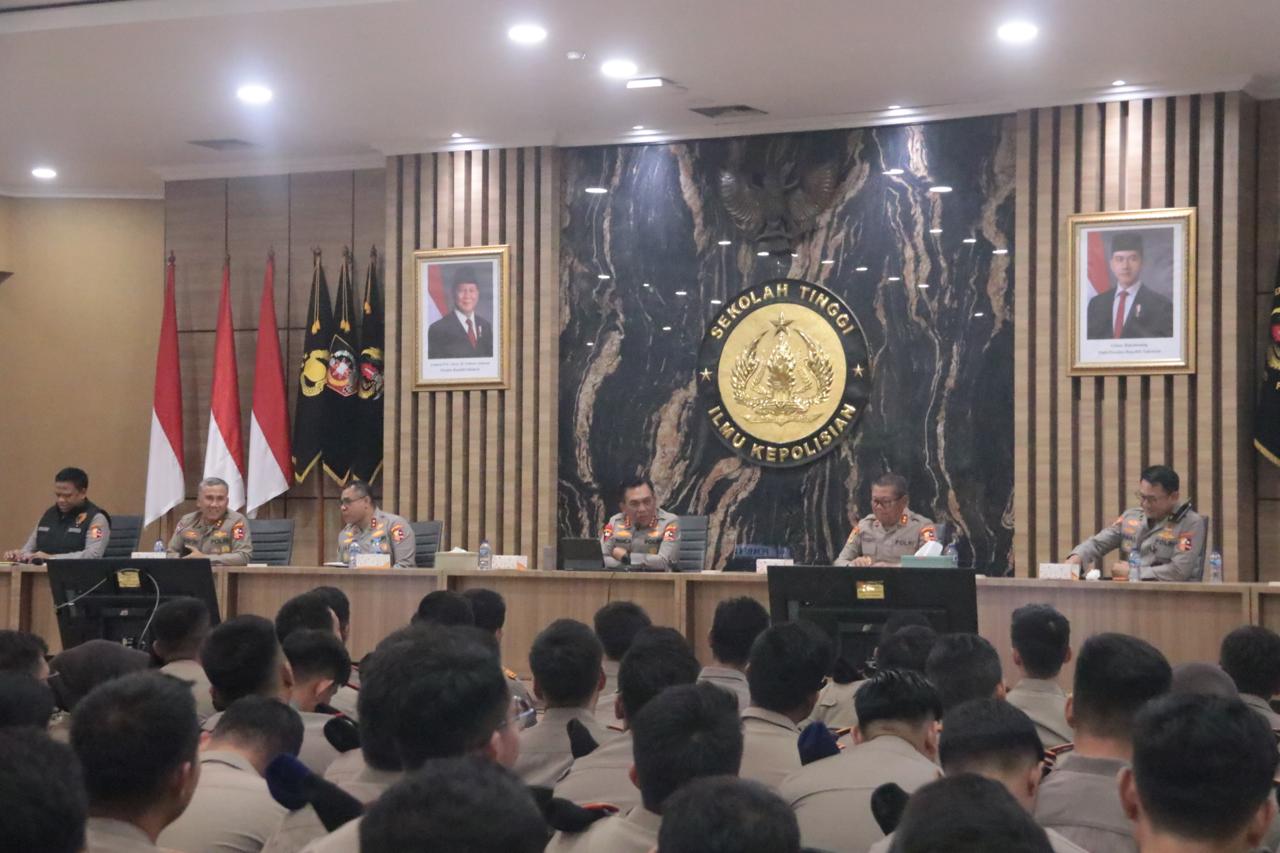
Sebelum diberangkatkan, seluruh personel mengikuti briefing dan pertelaan tugas yang dipimpin Kalemdiklat Polri Komjen Pol. Drs. R.Z. Panca Putra Simanjuntak, M.Si. Kegiatan tersebut dilakukan untuk memastikan seluruh personel memahami tugas, tanggung jawab, serta pembagian wilayah penugasan.
Selanjutnya, para personel menjalani pengecekan kesehatan dan mengikuti Apel Pemberangkatan. Setelah itu, personel dijadwalkan mulai bergerak menuju masing-masing Polda tujuan untuk melaksanakan tugas sesuai pembagian wilayah.
Kalemdiklat Polri Komjen Pol. Drs. R.Z. Panca Putra Simanjuntak, M.Si. mengatakan, penugasan tersebut merupakan bagian dari dukungan Polri dalam mencegah terjadinya karhutla sekaligus memberikan pengalaman kepada peserta didik untuk menerapkan pengetahuan dan kemampuan yang diperoleh selama pendidikan dalam pelaksanaan tugas di lapangan.
«“Penugasan ini merupakan bagian dari proses pembelajaran sekaligus pengabdian kepada masyarakat. Para peserta didik akan turun langsung untuk memberikan edukasi dan mengajak masyarakat bersama-sama mencegah terjadinya kebakaran hutan dan lahan,” ujar Komjen Pol. Panca Putra Simanjuntak.»
Ia menekankan bahwa pencegahan karhutla membutuhkan kepedulian dan peran bersama, khususnya masyarakat yang berada di wilayah rawan kebakaran hutan dan lahan.
«“Kami mengingatkan seluruh personel agar melaksanakan tugas dengan penuh tanggung jawab, mengedepankan komunikasi yang baik dengan masyarakat, serta membangun kesadaran bersama mengenai pentingnya menjaga lingkungan dan mencegah pembakaran lahan,” katanya.»
Menurutnya, para personel juga akan berkoordinasi dengan jajaran kewilayahan dan pihak terkait dalam melaksanakan kegiatan sesuai kondisi serta kebutuhan di masing-masing daerah.
«“Kita ingin kehadiran personel di lapangan memberikan manfaat nyata bagi masyarakat. Laksanakan tugas dengan baik, jaga komunikasi, dan lakukan koordinasi dengan seluruh pihak terkait agar upaya pencegahan karhutla dapat berjalan secara optimal,” tuturnya.»
Polri mengajak masyarakat untuk turut berperan dalam mencegah karhutla dengan menjaga lingkungan, tidak melakukan pembakaran lahan, serta segera melaporkan apabila menemukan potensi maupun kejadian kebakaran hutan dan lahan.
-
 Berita3 tahun ago
Anggota Polsek Pohjentrek Rutin Patroli SPBU Serta Memberikan Himbauan ke Pembeli dan Petugas
-
 Berita4 tahun ago
Ajak Anggotanya Tingkatkan Harkamtibmas, Kapolsek Purworejo Gelar Coffe Morning
-
 Berita4 tahun ago
Langkah Kompolnas dan Divisi Humas Polri Bangun Sinergitas Berikan Pelayanan Terbaik Kepada Masyarakat
-
 Berita3 tahun ago
Jelang Libur Nataru, Polres Probolinggo Pastikan Keamanan dan Kenyamanan Obyek Wisata
-
 Berita2 tahun ago
Bhabinkamtibmas Polsek Purworejo Lakukan Pengamanan Jalan Santai Peringatan HUT Ke-79 Republik Indonesia
-
 Berita3 tahun ago
Polsek Grati Patroli Antisipasi Kamtibmas Jelang Idul Fitri
-
 Berita3 tahun ago
Dengan Sinergitas, Polres Pasuruan Kota Sukseskan Pengamanan Tour de Pasuruan dan Suropati Race IV 2023
-
 Berita3 tahun ago
Bhabinkamtibmas Polsek Grati Dialogis Dengan Masyarakat Desa Binaan Ciptakan Keamanan