
Berita
Jaga Ketenangan Warga, Polsek Purworejo Awasi Balap Liar


Untuk mengantisipasi gangguan kamtibmas terutama balapan liar yang meresahkan masyarakat, Polsek Purworejo Polres Pasuruan Kota melaksanakan patroli dan pemantauan di titik potensial untuk balapan liar, minggu dini hari (29/1/2023).
Kegiatan patroli yang dipimpin langsung oleh Kapolsek Purworejo Kompol Endy Purwanto SH rutin di lakukan untuk mencegah aksi balap liar di jalanan. Tidak hanya untuk cegah aksi balap liar namun patroli ini juga untuk antisipasi kejahatan lainya.
Petugas memilih jalan Panglima Sudirman di Kecamatan Purworejo karena jalan tersebut merupakan jalan lurus dan juga merupakan jalur yang lebar sehingga rawan digunakan untuk aksi balap liar.
Ditemui ditempat kegiatan, Kapolsek Purworejo Kompol Endy Purwanto SH menerangkan bahwa untuk mengantisipasi balapan liar tersebut telah disiagakan anggota setiap hari untuk berpatroli guna mencegah terjadinya aksi balap liar yang dapat meresahkan masyarakat dan mengganggu pengguna jalan lain.
“ini dilakukan tidak hanya oleh polisi yang berpakaian dinas saja tetapi juga dilakukan oleh personil opsnal berpakaian preman yang juga ikut berperan aktif cegah aksi balap liar di wilayahnya”, Ujar Kapolsek Purworejo.
Kompol Endy menambahkan, “Mohon dukungan masyarakat apabila menemukan indikasi adanya balap liar bisa menginformasikan kepada Polisi. Selain itu mari Kita jaga situasi kamtibmas di Kota Pasuruan khususnya di wilayah kecamatan purworejo aman, nyaman dan kondusif serta tidak lupa disiplin prokes “ pungkasnya. (Hms Pwj).

Berita
Polsek Kraton Sosialisasikan Call Center 110, Wujudkan Pelayanan Polri yang Cepat dan Responsif

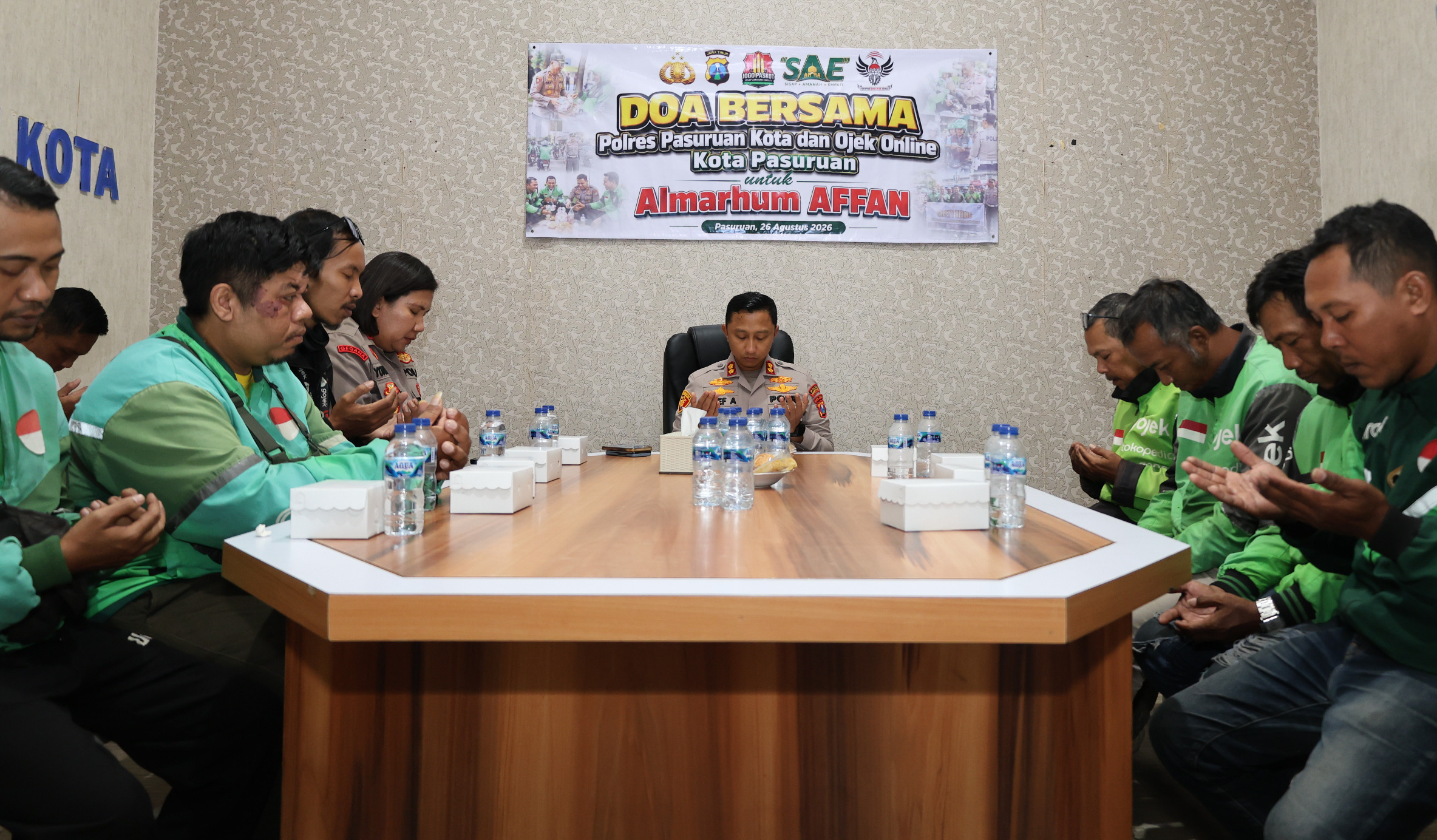
Polresta Pasuruan – Kapolres Pasuruan Kota AKBP Arief Ardiansyah Prasetya, S.I.K., S.H., M.H. bersama jajaran dan komunitas ojek online (ojol) se-Kota Pasuruan menggelar doa bersama untuk almarhum Affan, Rabu (26/8/2026).
Kegiatan yang berlangsung di Kantor Satlantas Polres Pasuruan Kota, Jalan Balaikota, Kelurahan Kandangsapi, Kecamatan Panggungrejo, Kota Pasuruan tersebut berlangsung khidmat dan penuh kekeluargaan.
Turut hadir Wakapolres Pasuruan Kota, Kasat Lantas Polres Pasuruan Kota, jajaran kepolisian serta perwakilan komunitas ojek online di Kota Pasuruan.
Dalam suasana penuh kebersamaan, seluruh peserta memanjatkan doa agar almarhum Affan mendapatkan tempat terbaik di sisi Allah SWT serta keluarga yang ditinggalkan diberikan kekuatan, ketabahan dan keikhlasan.
Kapolres menyampaikan rasa duka dan belasungkawa kepada keluarga almarhum. Menurutnya, doa bersama menjadi wujud kepedulian sekaligus ruang untuk saling menguatkan dalam suasana kekeluargaan.
“Semoga almarhum mendapatkan tempat terbaik di sisi Allah SWT dan keluarga yang ditinggalkan diberikan kekuatan serta ketabahan. Kami turut menyampaikan rasa duka dan belasungkawa yang mendalam,” ujar AKBP Arief.
Kapolres juga menyampaikan apresiasi atas kebersamaan yang selama ini terjalin antara kepolisian dan komunitas ojek online di Kota Pasuruan.
Ia berharap komunikasi dan hubungan baik tersebut dapat terus terjaga sebagai bagian dari kebersamaan seluruh elemen masyarakat dalam menciptakan suasana Kota Pasuruan yang aman, nyaman dan harmonis.
Kegiatan berlangsung sederhana dan penuh kekhidmatan. Para peserta mengikuti rangkaian doa bersama sebagai bentuk penghormatan dan kepedulian kepada almarhum serta keluarga yang ditinggalkan.
Melalui kegiatan tersebut, Polres Pasuruan Kota bersama komunitas ojek online menunjukkan semangat kebersamaan, kepedulian dan solidaritas dalam suasana penuh kekeluargaan.
Polres Pasuruan Kota berharap hubungan baik dengan berbagai elemen masyarakat, termasuk komunitas ojek online, terus terjalin melalui komunikasi, silaturahmi dan kebersamaan demi terciptanya kehidupan masyarakat yang aman, damai dan kondusif.
-
 Berita3 tahun ago
Anggota Polsek Pohjentrek Rutin Patroli SPBU Serta Memberikan Himbauan ke Pembeli dan Petugas
-
 Berita4 tahun ago
Ajak Anggotanya Tingkatkan Harkamtibmas, Kapolsek Purworejo Gelar Coffe Morning
-
 Berita4 tahun ago
Langkah Kompolnas dan Divisi Humas Polri Bangun Sinergitas Berikan Pelayanan Terbaik Kepada Masyarakat
-
 Berita3 tahun ago
Jelang Libur Nataru, Polres Probolinggo Pastikan Keamanan dan Kenyamanan Obyek Wisata
-
 Berita2 tahun ago
Bhabinkamtibmas Polsek Purworejo Lakukan Pengamanan Jalan Santai Peringatan HUT Ke-79 Republik Indonesia
-
 Berita3 tahun ago
Polsek Grati Patroli Antisipasi Kamtibmas Jelang Idul Fitri
-
 Berita3 tahun ago
Dengan Sinergitas, Polres Pasuruan Kota Sukseskan Pengamanan Tour de Pasuruan dan Suropati Race IV 2023
-
 Berita3 tahun ago
Bhabinkamtibmas Polsek Grati Dialogis Dengan Masyarakat Desa Binaan Ciptakan Keamanan