
Berita
Polisi Berhasil Menangkap Komplotan Curanmor 26 TKP di Surabaya


Surabaya – Satuan Reserse Kriminal Polres Pelabuhan Tanjung Perak Surabaya Polda Jatim, berhasil mengamankan dua dari empat kawanan pencuri yang beraksi di 26 tempat kejadian perkara (TKP) di Kota Surabaya Jawa Timur.
Diketahui, kedua pelaku yang berhasil diamankan berinisial PR (28) warga Jalan Randu Bulak Banteng Baru Surabaya dan SW (28) warga Jalan Bulak Banteng Surabaya.
Kemudian dua kawannya FJ dan SL, berhasil melarikan diri, sampai saat ini masih dalam pengejaran petugas kepolisian (DPO).
Kasat Reskrim Polres Pelabuhan Tanjung Perak Surabaya, AKP Arief Rizky Wicaksana seizin Kapolres AKBP Herlina menjelaskan, penangkapan terhadap pelaku setelah pihaknya melakukan penyelidikan terkait dengan laporan masuk dari beberapa TKP yang menjadi korban pencurian.
Dalam laporan tersebut, kata Arief sapaan akrabnya, pada Selasa (31/01/2023), awalnya korban yang memarkir kendaraan di wilayah Rusun Lama Tambak Wedi Surabaya, motornya telah hilang yang diduga dicuri oleh komplotan tersebut.
“Dari hasil penyelidikan anggota Sat Reskrim mendapatkan informasi bahwa 4 pelaku pencuri motor honda beat, yang menyasar di wilayah rumah susun tersebut,” kata Arief, pada Selasa (31/01/2023).
Ia mengatakan, setelah mendapati keberadaan pelaku, kemudian anggota langsung menyergap kedua pelaku. Setelah interogasi, pelaku mengaku melakukan aksi pencurian bersama dua temannya yakni FJ dan SL (DPO).
Bahkan dari pengakuan kedua pelaku, mereka sudah melakukan aksi pencurian di 26 TKP yang berbeda yakni, parkiran Rusun lama Tambak Wedi, Jalan Bulak Banteng Kidul, rumah kos Jalan Tambak Mayor Utara, parkiran Kos Bulak Banteng, Kedungdoro yang berhasil memetik honda Beat, Jl. Wonorejo hasil Vario, Keputih berhasil honda Beat, Sidotopo berhasil Scoopy dan Vario.
Kemudian di wilayah Gembong berhasil honda Beat, Boto Putih hasil honda Beat, Bulak Banteng hasil honda Vario, Tegalsari hasil honda Vario, Tegalsari hasil honda Beat, Tambak mayor hasil honda Vario dan Scoopy, Boto Putih hasil honda Vario, Tambak Wedi hasil honda Beat.
Untuk wilayah lain, Tegalsari mereka berhasil mencuri honda Vario, dan honda Beat, Medokan semampir berhasil honda Beat, Nginden berhasil Scoopy, Perak berhasil honda Beat, Bulak banteng dengan hasil honda Vario, Bulak Banteng berhasil honda Vario, dan 3 melakukan aksi pada pertengahan November 2022, di Jalan Tambak Wedi dengan berhasil honda beat.
“Mereka ini sudah meresahkan dan sudah banyak laporan. yang kami terima sekitar empat laporan kami kembangkan dan berhasil mengamankan dua orang pelaku, dan dua pelaku masih terus kami kejar,” ujar Arief, kepada wartawan.
Dalam melakukan aksinya pelaku, jelas Arief menyatakan, dari masing-masing pelaku memiliki peran yang berbeda, ada yang bagian eksekutor satu orang dan satunya lagi menunggu di luar dan mengawasi situasi.
“Pelaku ini melakukan aksinya pada malam hari secara mobile untuk mencari sasaran motor yang terparkir tanpa pengawasan pemilik (lenggah.red), pada saat melakukan aksi pelaku menggunakan kunci T,” jelasnya.
Adapun barang bukti yang berhasil diamankan Polisi dari dua pelaku adalah, satu kaos warna merah, satu jaket, uang Rp 600, satu Celana Jeans, satu mata kunci T, satu kunci pas ukuran 8.
“Atas perbuatannya kedua pelaku disangkakan dengan Pasal 363 ayat 2 tentang Pencurian dengan ancaman hukuman 7 tahun penjara,” pungkasnya.

Berita
Polsek Keboncandi Gelar Patroli Dialogis Bersama Security Bank, Perkuat Keamanan dan Antisipasi Gangguan Kamtibmas

Berita
Polsek Kraton Gelar Patroli dan Monitoring di SPBU Pertamina 54.671.34, Antisipasi Kelangkaan BBM dan Jaga Kondusivitas Kamtibmas
Berita
Jelang Tradisi Petik Laut, Satpolairud Polres Pasuruan Kota Berikan Imbauan Keselamatan kepada Nelayan
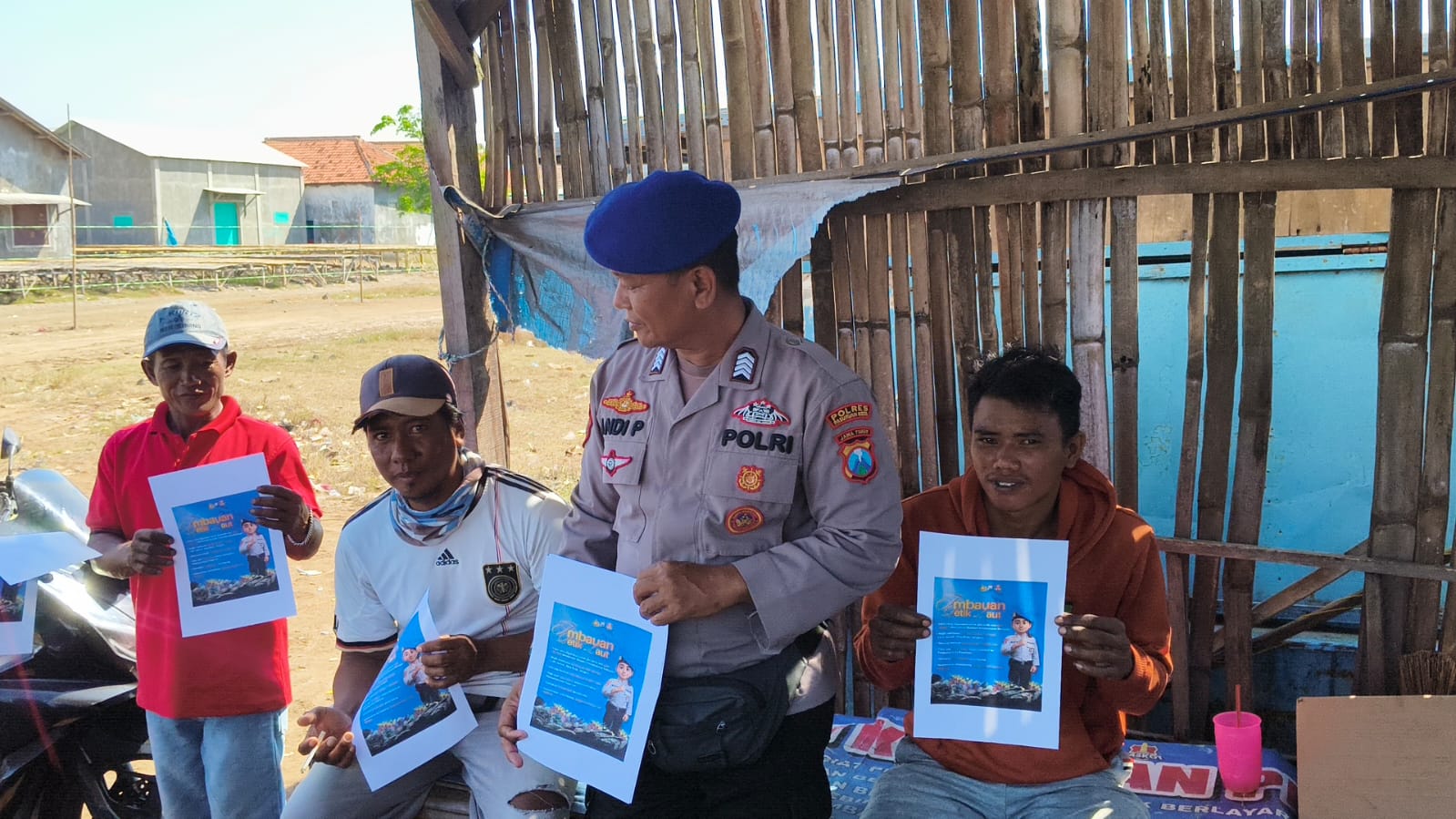
Polresta Pasuruan – Menjelang pelaksanaan tradisi Petik Laut, Satpolairud Polres Pasuruan Kota melaksanakan kegiatan imbauan keselamatan kepada para nelayan dan masyarakat pesisir di wilayah Ngemplakrejo, Kota Pasuruan, Jumat (26/6/2026).
Kegiatan tersebut dilaksanakan sekitar pukul 12.45 WIB sebagai bentuk langkah preventif kepolisian dalam mendukung kelancaran serta keselamatan masyarakat yang akan mengikuti tradisi Petik Laut.
Kasat Polairud Polres Pasuruan Kota AKP Edy Suseno, S.H. mengatakan, imbauan ini diberikan agar seluruh rangkaian kegiatan Petik Laut dapat berjalan aman, tertib, dan tetap mengutamakan keselamatan.
“Kami mengimbau kepada para nelayan dan masyarakat pesisir agar memastikan kapal yang digunakan benar-benar layak berlayar, membawa alat keselamatan, serta tidak mengangkut penumpang melebihi kapasitas kapal,” ujar AKP Edy Suseno.
Selain itu, Satpolairud juga mengingatkan para nahkoda kapal agar selalu memperhatikan kondisi cuaca sebelum berlayar. Apabila cuaca buruk, masyarakat diminta untuk tidak memaksakan diri melaut demi menghindari hal-hal yang tidak diinginkan.
“Keselamatan penumpang menjadi tanggung jawab penuh nahkoda kapal. Karena itu, kami minta seluruh pihak tetap waspada dan mematuhi imbauan yang telah disampaikan,” tambahnya.
Dalam kegiatan tersebut, personel Satpolairud Polres Pasuruan Kota juga mengajak masyarakat pesisir untuk bersama-sama menjaga situasi kamtibmas selama pelaksanaan tradisi Petik Laut berlangsung.
AKP Edy Suseno menegaskan bahwa kehadiran Satpolairud di tengah masyarakat pesisir merupakan bentuk pelayanan Polri dalam memberikan rasa aman, khususnya pada kegiatan masyarakat yang melibatkan aktivitas di perairan.
“Kami berharap tradisi Petik Laut ini dapat berjalan lancar, aman, dan menjadi kegiatan budaya masyarakat pesisir yang tetap mengedepankan keselamatan bersama,” pungkasnya.
Satpolairud Polres Pasuruan Kota juga mengimbau masyarakat pesisir agar segera menghubungi layanan darurat Kepolisian Call Center 110 apabila mengetahui adanya potensi gangguan kamtibmas, kecelakaan perairan, maupun kondisi darurat lainnya selama rangkaian tradisi Petik Laut berlangsung.
-
 Berita3 tahun ago
Anggota Polsek Pohjentrek Rutin Patroli SPBU Serta Memberikan Himbauan ke Pembeli dan Petugas
-
 Berita3 tahun ago
Ajak Anggotanya Tingkatkan Harkamtibmas, Kapolsek Purworejo Gelar Coffe Morning
-
 Berita3 tahun ago
Langkah Kompolnas dan Divisi Humas Polri Bangun Sinergitas Berikan Pelayanan Terbaik Kepada Masyarakat
-
 Berita3 tahun ago
Jelang Libur Nataru, Polres Probolinggo Pastikan Keamanan dan Kenyamanan Obyek Wisata
-
 Berita2 tahun ago
Bhabinkamtibmas Polsek Purworejo Lakukan Pengamanan Jalan Santai Peringatan HUT Ke-79 Republik Indonesia
-
 Berita3 tahun ago
Polsek Grati Patroli Antisipasi Kamtibmas Jelang Idul Fitri
-
 Berita3 tahun ago
Dengan Sinergitas, Polres Pasuruan Kota Sukseskan Pengamanan Tour de Pasuruan dan Suropati Race IV 2023
-
 Berita3 tahun ago
Bhabinkamtibmas Polsek Grati Dialogis Dengan Masyarakat Desa Binaan Ciptakan Keamanan