Connect with us

Berita

Polri dan Kemenhaj Bentuk Satgas Haji 2026, Hadir Lindungi Jemaah Sesuai Arahan Presiden Prabowo

Published

on


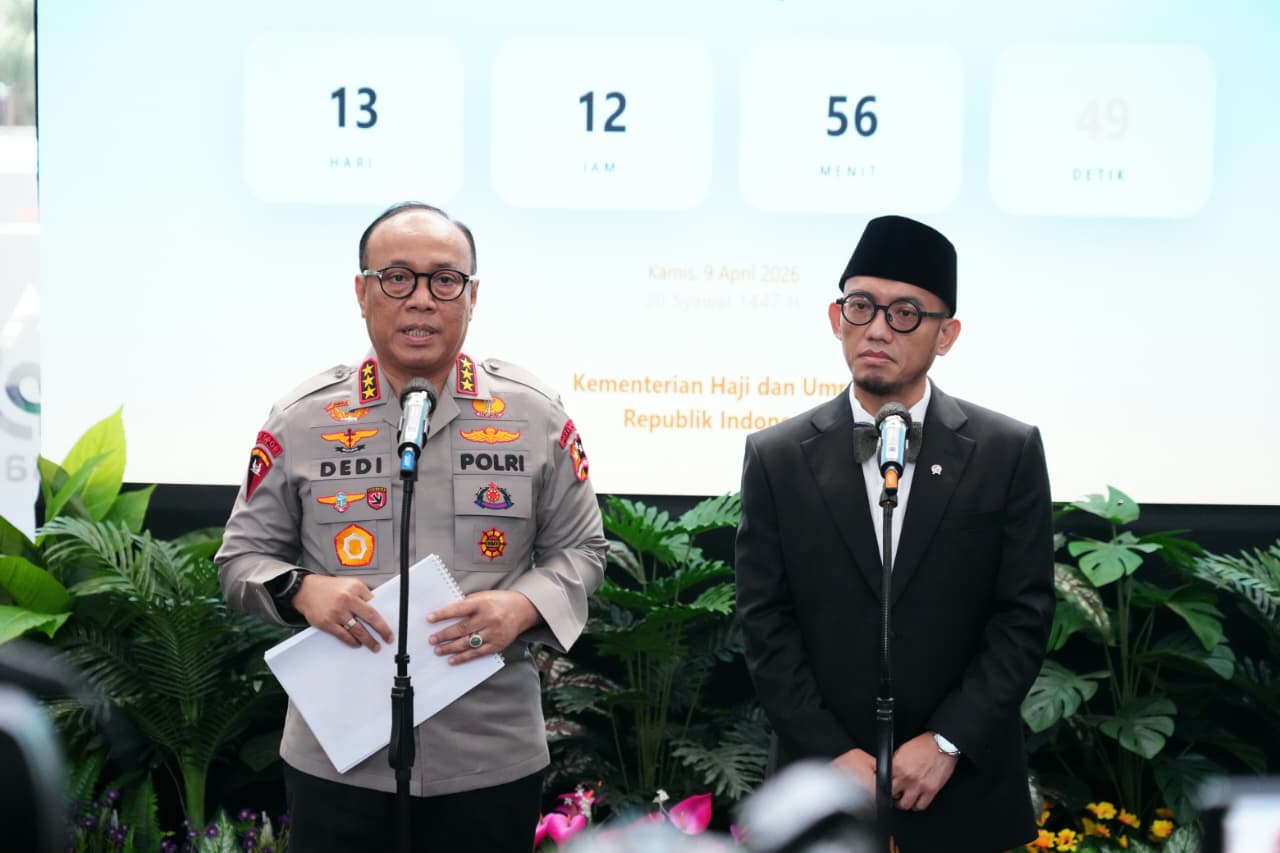
Jakarta, 9 April 2026 – Kepolisian Negara Republik Indonesia (Polri) bersama Kementerian Haji dan Umrah (Kemenhaj) resmi membentuk Satuan Tugas (Satgas) Haji 2026 sebagai langkah konkret melindungi calon jemaah dari praktik haji ilegal dan penipuan.

Kesepakatan ini terjalin dalam pertemuan Wakil Menteri Haji dan Umrah, Dahnil Anzar Simanjuntak, dengan Wakapolri, Komjen Pol. Prof. Dr. Dedi Prasetyo, di Kantor Kemenhaj, Jakarta, Kamis (9/4). Pembentukan Satgas ini merupakan tindak lanjut langsung dari arahan Presiden RI Prabowo Subianto untuk memastikan perlindungan menyeluruh bagi jemaah haji dan umrah Indonesia.

Wakapolri menegaskan, Satgas Haji akan bekerja terpadu dari pusat hingga daerah dengan pendekatan menyeluruh—mulai dari edukasi hingga penegakan hukum.

Polri akan mengedepankan:
• Edukasi (preemtif): Sosialisasi masif agar masyarakat tidak tertipu modus travel ilegal
• Pencegahan (preventif): Pengawasan ketat di bandara dan pelabuhan
• Penindakan (represif): Tindakan tegas terhadap pelaku penipuan dan haji ilegal

“Satgas ini kami bentuk untuk memastikan masyarakat terlindungi dan tidak menjadi korban penipuan dengan berbagai modus,” ujar Wakapolri.

Selain itu, akan dibuka hotline pengaduan terpadu guna mempercepat respons terhadap laporan masyarakat.

Ancaman Nyata: Puluhan Kasus dan Kerugian Miliaran Rupiah

Data Polri menunjukkan praktik penipuan haji masih marak:
• 42 kasus tengah diproses hukum
• 1 kasus sudah tahap lanjutan
• Kerugian mencapai Rp92,64 miliar

Sementara itu, pada 2025, aparat berhasil mencegah 1.243 calon jemaah berangkat menggunakan visa non-haji, dengan jumlah terbesar melalui Bandara Soekarno-Hatta.

Temuan ini menegaskan bahwa pengawasan dan penindakan harus diperkuat secara sistematis.

Sinergi Hingga ke Arab Saudi

Tidak hanya di dalam negeri, Polri juga memperluas koordinasi hingga ke Arab Saudi. Personel akan ditempatkan untuk memperkuat komunikasi dengan aparat keamanan di Jeddah dan Mekkah.

Langkah ini memastikan perlindungan jemaah Indonesia tetap berjalan, bahkan saat berada di luar negeri.

Komitmen Pemerintah: Aman dan Tidak Membebani

Wakil Menteri Haji dan Umrah menegaskan, Satgas Haji dibentuk untuk menjalankan dua fokus utama arahan Presiden:
1. Perlindungan penuh terhadap jemaah
2. Menjaga agar biaya haji tidak semakin membebani masyarakat

Pemerintah juga memastikan bahwa kenaikan biaya global tidak serta-merta dibebankan kepada jemaah.

“Negara hadir untuk melindungi jemaah, baik dari sisi keamanan maupun pembiayaan,” tegasnya.

Imbauan: Waspada Modus Haji Ilegal

Polri mengingatkan masyarakat untuk:
• Tidak tergiur penawaran haji dengan visa non-resmi
• Memastikan travel memiliki izin resmi
• Segera melapor jika menemukan indikasi penipuan

“Modus akan terus berkembang. Karena itu kewaspadaan masyarakat menjadi kunci. Polri akan bertindak tegas demi melindungi masyarakat,” pungkas Wakapolri.

Pembentukan Satgas Haji 2026 menjadi bukti nyata kehadiran negara dalam melindungi masyarakat. Polri, bersama Kemenhaj dan seluruh pemangku kepentingan, terus bergerak cepat dan responsif.

Continue Reading
Click to comment

Leave a Reply

Alamat email Anda tidak akan dipublikasikan. Ruas yang wajib ditandai *

Berita

Coronavirus disease 2019

Published

on

COVID-19 is a contagious disease caused by the coronavirus SARS-CoV-2. In January 2020, the disease spread worldwide, resulting in the COVID-19 pandemic.

The symptoms of COVID‑19 can vary but often include fever,[7] fatigue, cough, breathing difficulties, loss of smell, and loss of taste.[8][9][10] Symptoms may begin one to fourteen days after exposure to the virus. At least a third of people who are infected do not develop noticeable symptoms.[11][12] Of those who develop symptoms noticeable enough to be classified as patients, most (81%) develop mild to moderate symptoms (up to mild pneumonia), while 14% develop severe symptoms (dyspnea, hypoxia, or more than 50% lung involvement on imaging), and 5% develop critical symptoms (respiratory failure, shock, or multiorgan dysfunction).[13] Older people have a higher risk of developing severe symptoms. Some complications result in death. Some people continue to experience a range of effects (long COVID) for months or years after infection, and damage to organs has been observed.[14] Multi-year studies on the long-term effects are ongoing.[15]

COVID‑19 transmission occurs when infectious particles are breathed in or come into contact with the eyes, nose, or mouth. The risk is highest when people are in close proximity, but small airborne particles containing the virus can remain suspended in the air and travel over longer distances, particularly indoors. Transmission can also occur when people touch their eyes, nose, or mouth after touching surfaces or objects that have been contaminated by the virus. People remain contagious for up to 20 days and can spread the virus even if they do not develop symptoms.[16]

Testing methods for COVID-19 to detect the virus’s nucleic acid include real-time reverse transcription polymerase chain reaction (RT‑PCR),[17][18] transcription-mediated amplification,[17][18][19] and reverse transcription loop-mediated isothermal amplification (RT‑LAMP)[17][18] from a nasopharyngeal swab.[20]

Several COVID-19 vaccines have been approved and distributed in various countries, many of which have initiated mass vaccination campaigns. Other preventive measures include physical or social distancing, quarantining, ventilation of indoor spaces, use of face masks or coverings in public, covering coughs and sneezes, hand washing, and keeping unwashed hands away from the face. While drugs have been developed to inhibit the virus, the primary treatment is still symptomatic, managing the disease through supportive care, isolation, and experimental measures.

Continue Reading

Berita

Coronavirus disease 2019

Published

on

COVID-19 is a contagious disease caused by the coronavirus SARS-CoV-2. In January 2020, the disease spread worldwide, resulting in the COVID-19 pandemic.

The symptoms of COVID‑19 can vary but often include fever,[7] fatigue, cough, breathing difficulties, loss of smell, and loss of taste.[8][9][10] Symptoms may begin one to fourteen days after exposure to the virus. At least a third of people who are infected do not develop noticeable symptoms.[11][12] Of those who develop symptoms noticeable enough to be classified as patients, most (81%) develop mild to moderate symptoms (up to mild pneumonia), while 14% develop severe symptoms (dyspnea, hypoxia, or more than 50% lung involvement on imaging), and 5% develop critical symptoms (respiratory failure, shock, or multiorgan dysfunction).[13] Older people have a higher risk of developing severe symptoms. Some complications result in death. Some people continue to experience a range of effects (long COVID) for months or years after infection, and damage to organs has been observed.[14] Multi-year studies on the long-term effects are ongoing.[15]

COVID‑19 transmission occurs when infectious particles are breathed in or come into contact with the eyes, nose, or mouth. The risk is highest when people are in close proximity, but small airborne particles containing the virus can remain suspended in the air and travel over longer distances, particularly indoors. Transmission can also occur when people touch their eyes, nose, or mouth after touching surfaces or objects that have been contaminated by the virus. People remain contagious for up to 20 days and can spread the virus even if they do not develop symptoms.[16]

Testing methods for COVID-19 to detect the virus’s nucleic acid include real-time reverse transcription polymerase chain reaction (RT‑PCR),[17][18] transcription-mediated amplification,[17][18][19] and reverse transcription loop-mediated isothermal amplification (RT‑LAMP)[17][18] from a nasopharyngeal swab.[20]

Several COVID-19 vaccines have been approved and distributed in various countries, many of which have initiated mass vaccination campaigns. Other preventive measures include physical or social distancing, quarantining, ventilation of indoor spaces, use of face masks or coverings in public, covering coughs and sneezes, hand washing, and keeping unwashed hands away from the face. While drugs have been developed to inhibit the virus, the primary treatment is still symptomatic, managing the disease through supportive care, isolation, and experimental measures.

Continue Reading

Berita

tc-check-test1

Published

on

tc-manager precheck test1 – https://test1.com

Continue Reading

Trending