
Berita
Pantau Ketersediaan Minyak Goreng, Polres Pasuruan Kota Gencarkan Patroli Pertokoan atau Pasar


Polresta Pasuruan – Anggota Polres Pasuruan Kota melaksanakan pengecekan dan pemantauan minyak goreng di beberapa toko besar, kios, dan pasar tradisional wilayah Kota Pasuruan, Minggu (21/8/2022).
Kasat Samapta Akp Yudi mengatakan hasil dalam pengecekan tersebut bahwa untuk stok minyak goreng di wilayah Kota Pasuruan masih stabil.
“Untuk ketersediaan minyak goreng curah maupum kemasan sampai saat ini masih dalam kondisi stabil,”tutur Kasat Samapta
Lebih lanjut diungkapkan, diimbau kepada masyarakat untuk tidak panik untuk ketersediaan minyak goreng.
“Kita imbau kepada masyarakat jangan sampai panik atau membeli berlebihan,” tambahnya.
Mengungkapkan, pihaknya akan melakukan tindakan tegas bila menemukan adanya oknum pedagang yang melakukan penimbunan minyak goreng, bila kami menemukan ada oknum yang melakukan penimbunan minyak goreng tentunya akan kami tindak tegas sesuai hukum yang berlaku.

Berita
Polda Jatim Ungkap 3.157 Kasus Narkoba Semester I Tahun 2026, Selamatkan 2,79 Juta Jiwa dari Bahaya Narkotika

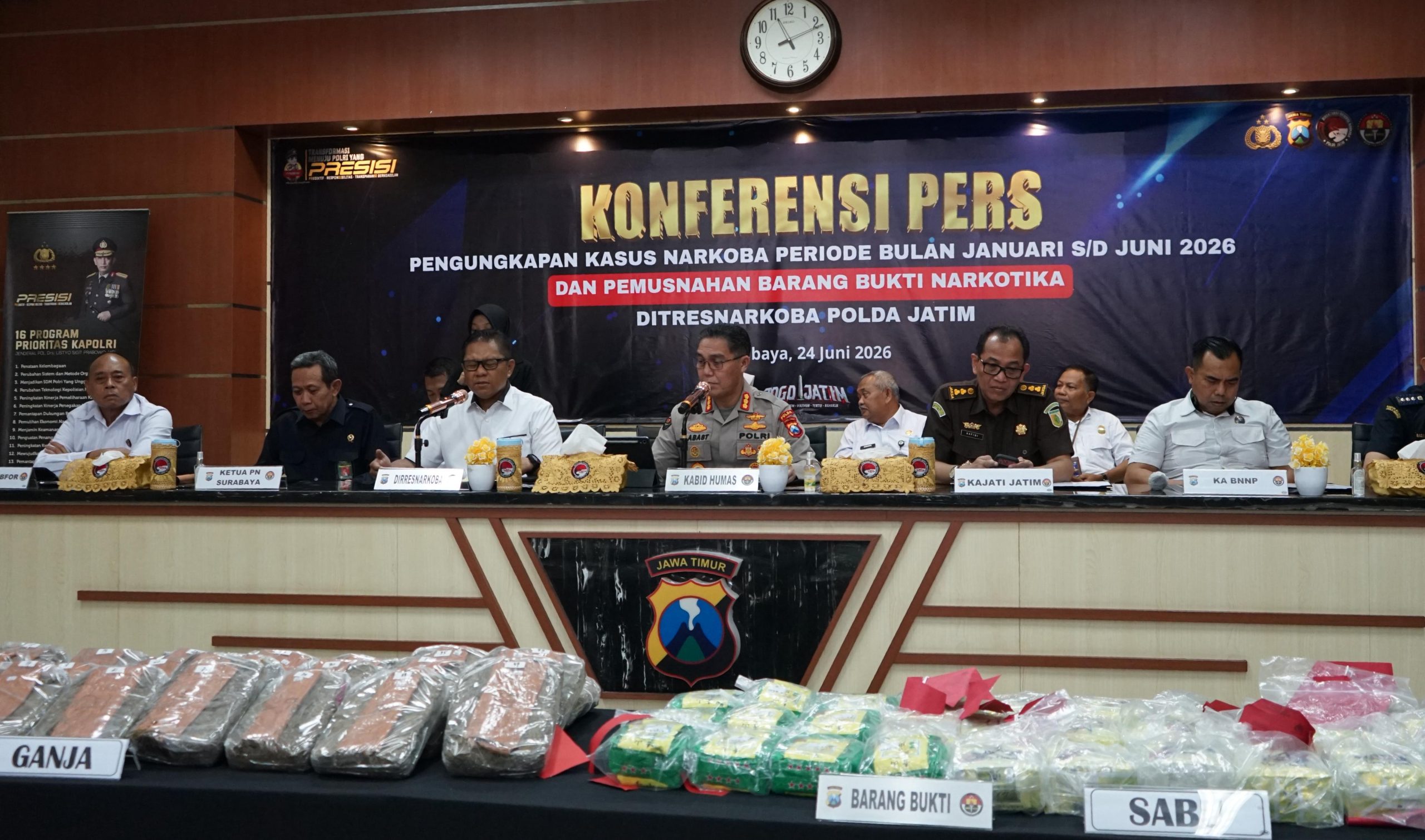
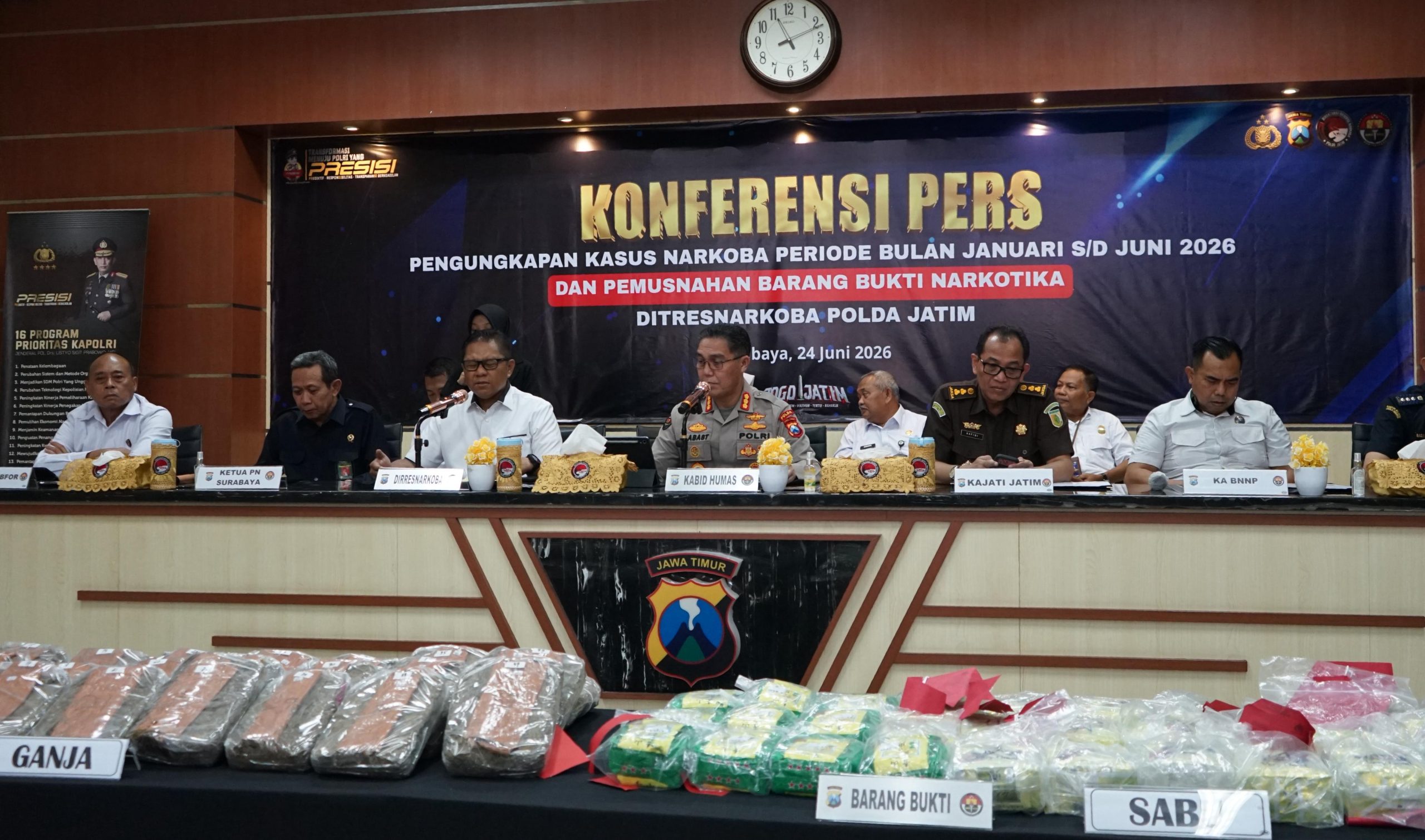
SURABAYA – Polda Jawa Timur melalui Direktorat Reserse Narkoba bersama Polres jajaran berhasil mengungkap 3.157 kasus tindak pidana narkoba selama periode Januari hingga Juni 2026.
Dari pengungkapan tersebut, sebanyak 4.061 tersangka diamankan, dengan sejumlah barang bukti narkotika dan obat keras berbahaya dalam jumlah besar berhasil disita.
Hal itu disampaikan oleh Kabid Humas Polda Jatim, Kombes Pol Jules Abraham Abast, dalam kegiatan konferensi pers dan pemusnahan barang bukti hasil operasi narkoba semester I tahun 2026 yang digelar di Gedung Press Conference, Mapolda Jatim, Rabu (24/6/2026).
“Kegiatan ini merupakan wujud komitmen Polda Jawa Timur dalam memberantas peredaran gelap dan penyalahgunaan narkoba demi melindungi masyarakat, khususnya generasi muda serta menjaga situasi keamanan dan ketertiban masyarakat di wilayah Jawa Timur,” ujar Kombes Abast.
Sementara itu Direktur Reserse Narkoba Polda Jatim Kombes Pol Muhammad Kurniawan menjelaskan bahwa capaian pengungkapan tersebut merupakan bagian dari pengabdian Polri dalam rangkaian peringatan Hari Bhayangkara ke-80.
Ia memaparkan, selama semester I tahun 2026 Ditresnarkoba Polda Jatim dan jajaran berhasil menyita barang bukti berupa 85,66 kilogram sabu, 82,44 kilogram ganja dan 53 batang tanaman ganja, 60.989 butir ekstasi serta 234,99 gram ekstasi bubuk, 22,226 kilogram kokain, 10,38 kilogram ketamin, serta 3.653.382 butir obat keras berbahaya.
“Dari data hasil pengungkapan tersebut, jumlah kasus pada semester I tahun 2026 mengalami peningkatan sebesar 4,54 persen dibanding semester I tahun 2025. Sementara jumlah tersangka juga meningkat sebesar 4,91 persen,” ungkap Kombes Pol Muhammad Kurniawan.
Ia menambahkan, dari keseluruhan barang bukti yang berhasil diamankan selama satu semester tersebut, Polda Jatim memperkirakan telah menyelamatkan sekitar 2,79 juta jiwa dari ancaman penyalahgunaan narkotika.
Dalam kesempatan yang sama, Polda Jatim juga melaksanakan pemusnahan barang bukti hasil pengungkapan dari empat kasus menonjol dengan jumlah tiga tersangka, berupa 33,346 kilogram sabu dan 38,995 kilogram ganja.
Kombes Pol Muhammad Kurniawan menegaskan, tingginya angka pengungkapan dan besarnya barang bukti yang diamankan menunjukkan bahwa Jawa Timur masih menjadi salah satu tujuan dalam peredaran narkotika, baik oleh jaringan lokal maupun internasional.
“Hal ini menjadi perhatian serius bagi kami. Karena itu, upaya pemberantasan peredaran gelap narkotika akan terus dilakukan secara berkelanjutan, baik melalui penegakan hukum maupun langkah pencegahan,” tegas Kombes Kurniawan.
Polda Jawa Timur menegaskan bahwa pemberantasan narkoba tidak dapat dilakukan oleh aparat penegak hukum semata, tetapi memerlukan dukungan seluruh elemen masyarakat.
Untuk itu, Polda Jatim mengajak seluruh masyarakat agar terus berperan aktif memberikan informasi apabila mengetahui adanya dugaan penyalahgunaan maupun peredaran gelap narkotika di lingkungan masing-masing.
Melalui pengungkapan dan pemusnahan barang bukti ini, Polda Jawa Timur menegaskan komitmennya untuk terus hadir memberikan perlindungan kepada masyarakat serta menjaga generasi muda dari ancaman bahaya narkoba. (*)
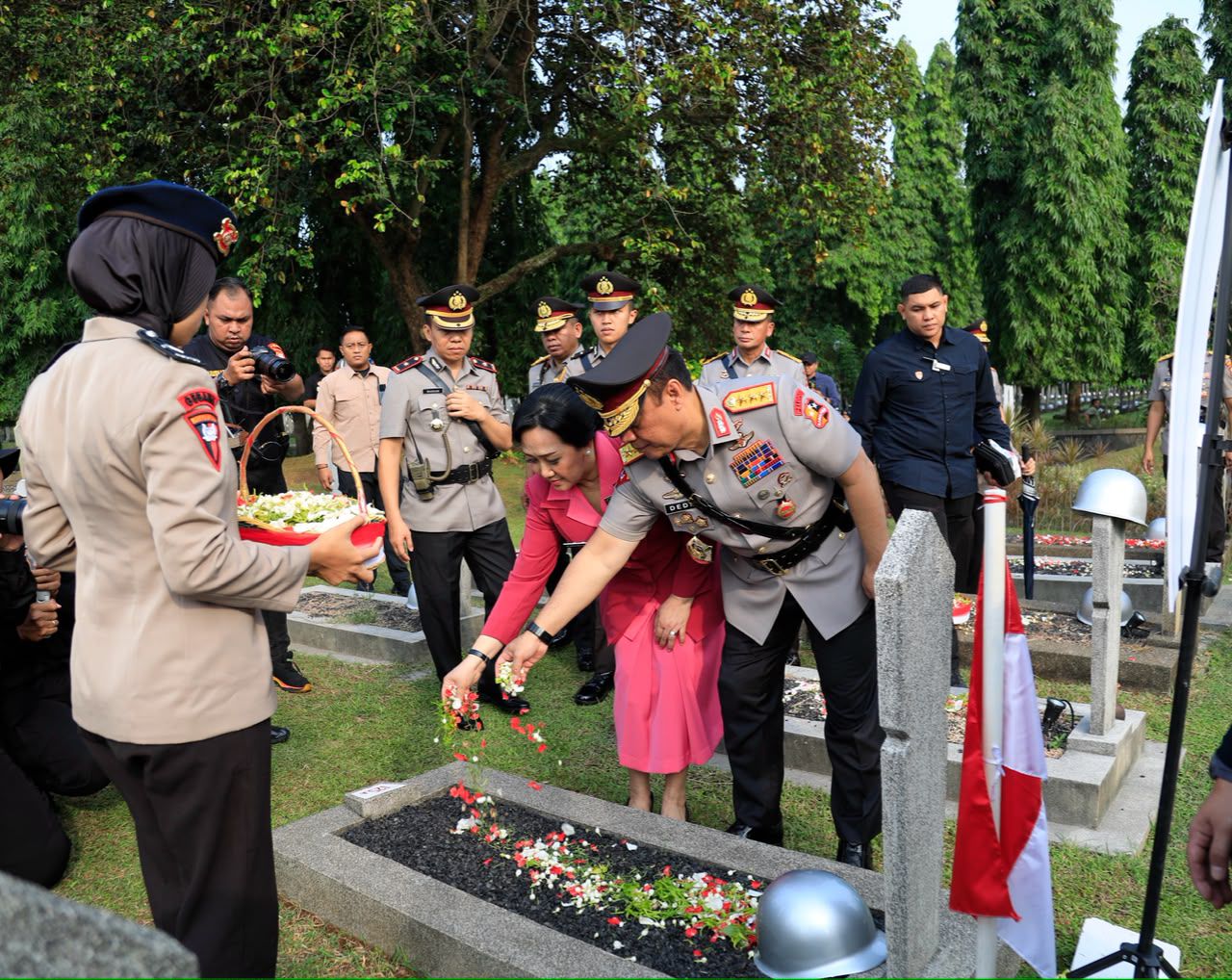
Jakarta — Menyambut Hari Bhayangkara ke-80, Polri menggelar ziarah nasional dan tabur bunga secara serentak di lima lokasi pada Rabu (24/6/2026). Kelima titik tersebut yakni Taman Makam Pahlawan Nasional Utama Kalibata, TPU Tanah Kusir, TMP Cikeas, Makam Jenderal Hoegeng, serta perairan Teluk Jakarta.
Dari lima lokasi tersebut, pelaksanaan ziarah nasional di Taman Makam Pahlawan Nasional Utama Kalibata, Jakarta Selatan, dipimpin langsung oleh Wakapolri Komjen Pol. Dedi Prasetyo. Kegiatan ini menjadi bagian dari rangkaian peringatan Hari Bhayangkara ke-80 sekaligus wujud penghormatan Polri kepada para pahlawan dan tokoh bangsa yang telah berjasa bagi negara.
Prosesi ziarah di TMPN Kalibata berlangsung khidmat. Upacara diawali dengan penghormatan kepada arwah para pahlawan, mengheningkan cipta, serta peletakan karangan bunga di monumen utama TMPN Kalibata oleh Wakapolri. Usai upacara, Wakapolri bersama jajaran melanjutkan prosesi tabur bunga di makam para pahlawan sebagai bentuk penghormatan dan doa atas jasa-jasa mereka bagi bangsa Indonesia.
Selain di TMPN Kalibata, rangkaian ziarah dan tabur bunga juga dilaksanakan secara serentak di TPU Tanah Kusir, TMP Cikeas, Makam Jenderal Hoegeng, serta di perairan Teluk Jakarta. Kegiatan tersebut diikuti oleh jajaran Polri sebagai bagian dari tradisi penghormatan institusi kepada para pendahulu, sekaligus momentum untuk meneguhkan nilai-nilai perjuangan, patriotisme, dan pengabdian dalam pelaksanaan tugas kepolisian.
Secara keseluruhan, pelaksanaan ziarah nasional dan tabur bunga dalam rangka Hari Bhayangkara ke-80 ini melibatkan sebanyak 1.037 personel. Kegiatan tersebut turut dihadiri unsur pejabat utama Mabes Polri, Korbrimob Polri, PP Polri, Bhayangkari, serta pegawai negeri pada Polri sesuai pembagian tugas di masing-masing lokasi.
Karo Penmas Divhumas Polri Brigjen Pol. Trunoyudo Wisnu Andiko mengatakan, ziarah nasional dan tabur bunga merupakan bagian penting dalam rangkaian Hari Bhayangkara ke-80 yang sarat makna penghormatan terhadap jasa para pahlawan sekaligus refleksi atas pengabdian Polri kepada masyarakat, bangsa, dan negara.
“Ziarah nasional dan tabur bunga ini bukan sekadar tradisi seremonial, tetapi menjadi momentum bagi seluruh insan Bhayangkara untuk mengenang jasa para pahlawan, meneladani nilai-nilai perjuangan mereka, dan meneguhkan komitmen pengabdian Polri kepada masyarakat, bangsa, dan negara,” ujar Brigjen Pol. Trunoyudo Wisnu Andiko.
Menurut Trunoyudo, semangat patriotisme, nasionalisme, dan pengorbanan yang ditunjukkan para pahlawan harus terus menjadi landasan moral bagi setiap personel Polri dalam menjalankan tugas. Memasuki delapan dekade pengabdian, Polri berkomitmen untuk terus melanjutkan semangat perjuangan tersebut melalui pelaksanaan tugas yang profesional, humanis, dan berorientasi pada pelayanan kepada masyarakat.
Peringatan Hari Bhayangkara ke-80, lanjut Trunoyudo, tidak hanya dimaknai sebagai perayaan institusional, tetapi juga sebagai momentum untuk memperkuat dedikasi, integritas, dan tanggung jawab Polri dalam menjaga keamanan dan ketertiban masyarakat, menegakkan hukum, serta memberikan perlindungan, pengayoman, dan pelayanan terbaik kepada masyarakat di seluruh Indonesia.
Berita
Ketahanan Pangan Jadi Isu Strategis Nasional, Wakapolri Luncurkan Buku ke-42 “Mengawal Pangan Menuai Aman”
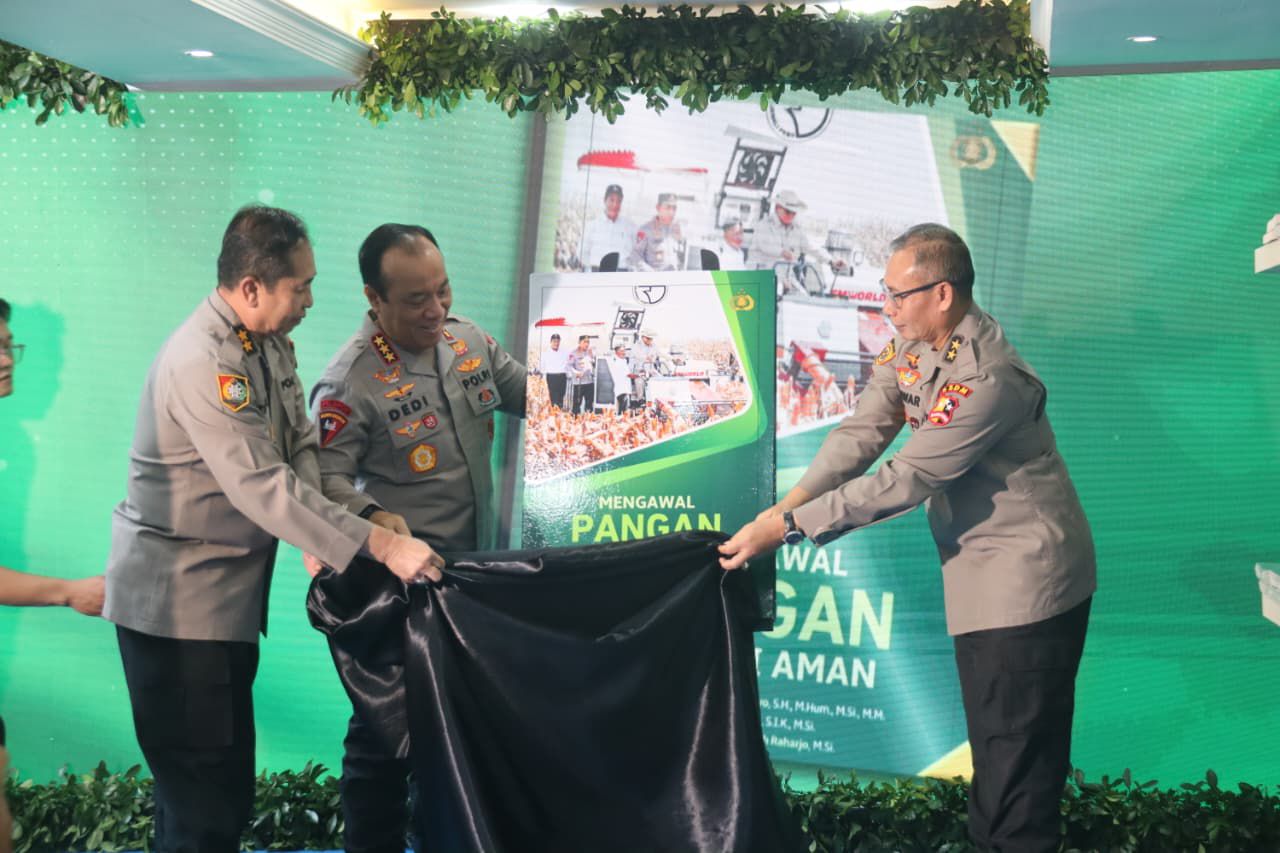
Jakarta Selatan – Ketahanan pangan kini tidak lagi dipandang semata sebagai urusan sektor pertanian, melainkan telah menjadi isu strategis yang berkaitan langsung dengan stabilitas nasional, kesejahteraan masyarakat, dan daya tahan bangsa menghadapi berbagai tantangan global. Berangkat dari perspektif tersebut, Wakil Kepala Kepolisian Negara Republik Indonesia (Wakapolri) Komjen Pol. Prof. Dr. Dedi Prasetyo, S.H., M.Hum., M.Si., M.M. meluncurkan buku ke-42 berjudul “Mengawal Pangan Menuai Aman” di Lobby Pusat Studi Kepolisian STIK-PTIK, Jakarta Selatan, Rabu (24/6/2026).
Buku yang telah terdaftar dalam Hak Kekayaan Intelektual (HAKI) dengan Nomor Pencatatan 001297886 tersebut ditulis bersama Irjen Pol. Dr. Anwar, S.I.K., M.Si. dan Irjen Pol. Dr. Susilo Teguh Raharjo, M.Si. Buku ini mengangkat pengalaman, refleksi kebijakan, dan pembelajaran lapangan mengenai pengawalan program ketahanan pangan nasional, khususnya pada komoditas jagung.
Dalam buku tersebut dijelaskan bahwa tantangan global seperti perubahan iklim, dinamika pasar internasional, pertumbuhan penduduk, alih fungsi lahan, hingga gangguan rantai pasok menuntut negara untuk memperkuat kemandirian pangan secara terintegrasi dan berkelanjutan. Oleh karena itu, penguatan sektor pangan tidak hanya menjadi agenda pembangunan, tetapi juga bagian dari upaya menjaga ketahanan nasional.
Buku “Mengawal Pangan Menuai Aman” juga menguraikan bagaimana peran Polri ditempatkan secara proporsional dalam mendukung program strategis nasional. Polri hadir melalui fungsi pengawalan, koordinasi, dan stabilisasi agar program ketahanan pangan dapat berjalan dengan aman, tertib, dan efektif, sekaligus memberikan kepastian bagi masyarakat dan para petani dalam menjalankan aktivitas produksi.
Wakapolri Komjen Pol. Prof. Dr. Dedi Prasetyo menegaskan bahwa ketahanan pangan merupakan fondasi penting bagi masa depan Indonesia. Menurutnya, keamanan dan pembangunan harus berjalan beriringan untuk memastikan masyarakat memperoleh akses pangan yang cukup, terjangkau, dan berkelanjutan.
“Ketahanan pangan bukan hanya soal hasil panen, tetapi juga tentang ketahanan bangsa. Ketika pangan terjaga, stabilitas sosial lebih kuat, kesejahteraan masyarakat meningkat, dan negara memiliki daya tahan yang lebih baik dalam menghadapi berbagai tantangan global,” ujar Wakapolri.
Sebagai buku ke-42 karya Wakapolri, “Mengawal Pangan Menuai Aman” diharapkan menjadi referensi bagi akademisi, pembuat kebijakan, praktisi, serta masyarakat luas dalam memahami keterkaitan antara ketahanan pangan, tata kelola pemerintahan, dan keamanan nasional. Buku ini sekaligus menegaskan komitmen Polri untuk terus berkontribusi tidak hanya melalui pengabdian di lapangan, tetapi juga melalui pengembangan pengetahuan dan gagasan strategis bagi kemajuan bangsa.
-
 Berita3 tahun ago
Anggota Polsek Pohjentrek Rutin Patroli SPBU Serta Memberikan Himbauan ke Pembeli dan Petugas
-
 Berita3 tahun ago
Ajak Anggotanya Tingkatkan Harkamtibmas, Kapolsek Purworejo Gelar Coffe Morning
-
 Berita3 tahun ago
Langkah Kompolnas dan Divisi Humas Polri Bangun Sinergitas Berikan Pelayanan Terbaik Kepada Masyarakat
-
 Berita3 tahun ago
Jelang Libur Nataru, Polres Probolinggo Pastikan Keamanan dan Kenyamanan Obyek Wisata
-
 Berita2 tahun ago
Bhabinkamtibmas Polsek Purworejo Lakukan Pengamanan Jalan Santai Peringatan HUT Ke-79 Republik Indonesia
-
 Berita3 tahun ago
Polsek Grati Patroli Antisipasi Kamtibmas Jelang Idul Fitri
-
 Berita3 tahun ago
Dengan Sinergitas, Polres Pasuruan Kota Sukseskan Pengamanan Tour de Pasuruan dan Suropati Race IV 2023
-
 Berita3 tahun ago
Bhabinkamtibmas Polsek Grati Dialogis Dengan Masyarakat Desa Binaan Ciptakan Keamanan