
Berita
Pemuda Pemilik Ratusan Pil Trihexyphenidyl Ditangkap Satnarkoba Polres Pasuruan Kota


Polresta Pasuruan – Satuan Reserse Narkoba (Satnarkoba) Polres Pasuruan Kota kembali mengungkap pelaku pengedar obat-obatan terlarang yang diduga kuat Jenis Pil Triheksifenidil atau pil THD, sebanyak 904 butir.
Kapoleres Pasuruan Kota AKBP Dr. Raden Muhammad Januari, S.H.,S.I.K.,M.Si melalui Kasat Narkoba AKP Nanang menjelaskan Pelakunya berhasil ditangkap di salah satu Toko di Kota Pasuruan.
“Benar kami telah melakukan penangkapanan terhadap seorang pelaku yaitu pelaku inisial RM,gan umur 26 tahun yang diduga kuat mengedarkan obat-obat terlarang jenis THD di kota Pasuruan pada hari Selasa 10 Januari 2022 kemarin, ” kata AKP Nanang.
Dari tangan seorang Saksi inisial DP diamankan 1 (satu) Bungkus plastik klip kecil yang didalamnya berisi 30 (tiga puluh) butir pil pipih warna putih yang salah satu sisinya berlogo “Y” yang diduga obat keras jenis pil Tryhexypenidyl yang di tandai dengan huruf A,
Dari Seorang Saksi Personel Sat Narkoba Polres Pasuruan kota melakukan pengembang dan berhasil mengamankan pelaku yang berinisial RM, dari tangan RM polisi berhasil mengamankan barang bukti berupa 1 (satu) Bungkus plastik klip kecil yang didalamnya berisi 100 (seratus) butir pil pipih warna putih yang salah satu sisinya berlogo “Y” yang diduga obat keras jenis pil Tryhexypenidyl yang di tandai dengan huruf B.1 (satu) Bungkus plastik klip kecil yang didalamnya berisi 99 (Sembilan puluh sembilan) butir pil pipih warna putih yang salah satu sisinya berlogo “Y” yang diduga obat keras jenis pil Tryhexypenidyl yang di tandai dengan huruf C.1 (satu) Botol plastik yang didalamnya berisi 705 (tujuh ratus lima) butir pil pipih warna putih yang salah satu sisinya berlogo “Y” yang diduga obat keras jenis pil Tryhexypenidyl yang di tandai dengan huruf D.1 (satu) buah tas Slempang warna hitam.1 (satu) buah dompet kecil warna merah. 1 (satu) Buah kardus kecil warna coklat. 3 (tiga) Bungkus plastik klip sedang yang masing-masing berisi banyak platik klip kecil. Uang tunai senilai Rp. 210.000 (dua ratus sepuluh ribu rupiah).1 (satu) Unit Hp merk VIVO 1904 warna merah hitam dengan silicon biru hitam beserta simcardnya dengan nomor 0895 XXXX XXXX, semua Total jumlah barang bukti 904 butir jenis pil Tryhexypenidyl
Dengan Kronologis Penangkapanan Pelaku inisial RM, Pada hari Selasa 10 Januari 2023 sekira jam 16.15 Wib anggota kepolisian mengamankan seseorang bernama inisial DP di pinggir jalan di Jl. Kota Pasuruan dan mendapati DP membawa 1 (satu) Bungkus plastik klip kecil yang didalamnya berisi 30 (tiga puluh) butir pil pipih warna putih yang salah satu sisinya berlogo “Y” yang diduga obat keras jenis pil Tryhexypenidyl yang disimpan di genggaman tangan sebelah kanan, setelah diamankan oleh petugas kepolisian, DP mengakui kalau barang bukti tersebut didapat dengan cara membeli Bersama temannya inisial TF.
Personel melakukan pengembangan dan di dapat Pelaku yang bernama RM Als. RJ pada hari Selasa tanggal 10 Januari 2023 sekira jam 16.00 Wib dengan harga Rp. 80.000 (delapan puluh ribu rupiah) di dalam salah satu Toko di Kota Pasuruan, dan pada hari Selasa tanggal 10 Januari 2023 sekira jam 16.30 Wib petugas Kepolisian menangkap seseorang bernama RM Als. RJ di dalam salah satu Toko di Kota Pasuruan, selanjutnya terlapor dan barang bukti dibawa ke Polres Pasuruan Kota untuk diperiksa lebih lanjut.
Akibat perbuatannya, kedua pelaku dijerat dengan
Pasal 197 atau Pasal 196 UU No. 36 Tahun 2009 Tentang Kesehatan, dengan ancaman penjara selama 15 tahun. Pelaku kini telah mendekam di ruang tahanan Polres Pasuruan kota.


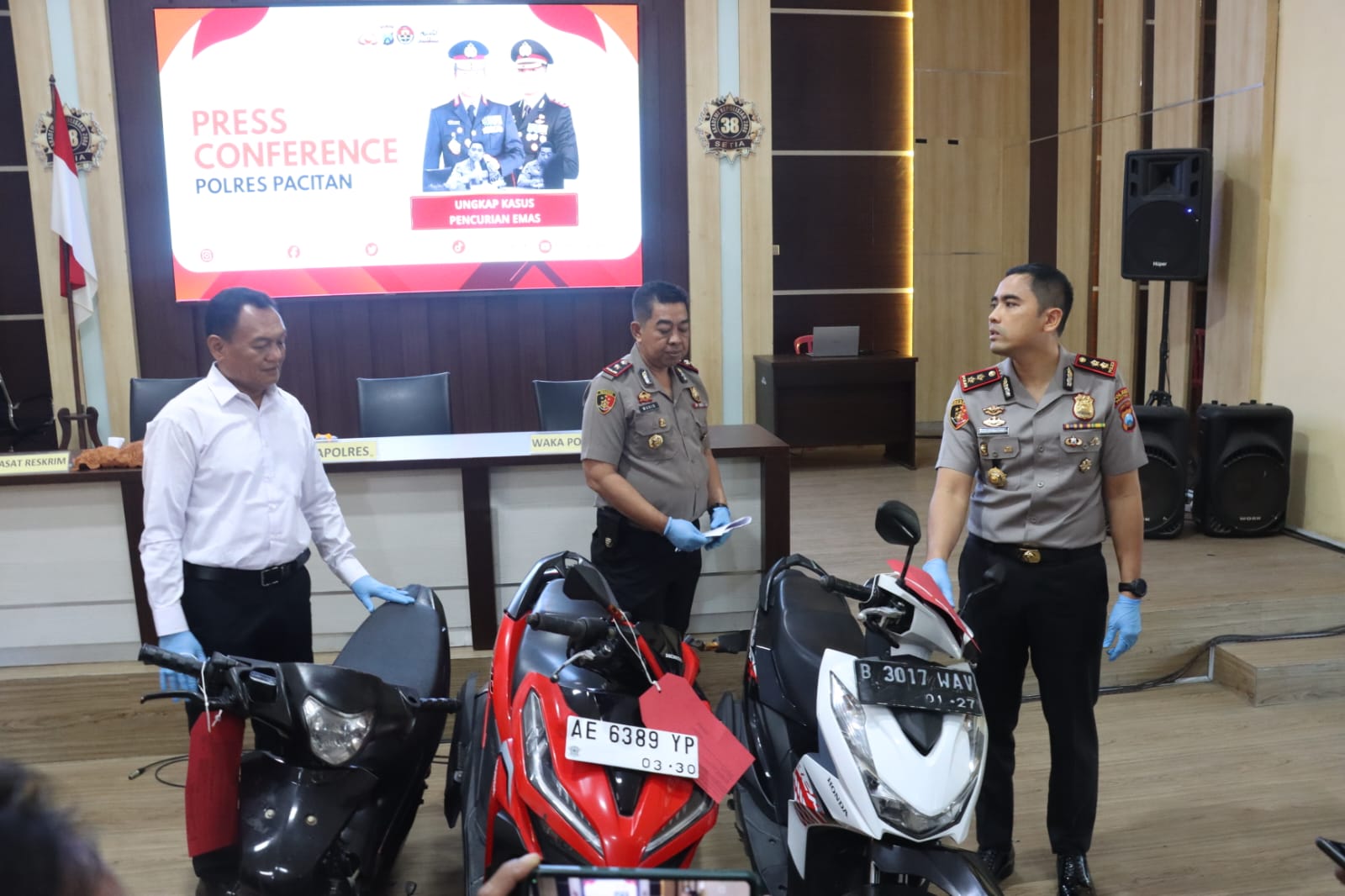
PACITAN – Satreskrim Polres Pacitan Polda Jatim berhasil mengungkap kasus pencurian uang dan perhiasan milik seorang lansia inisial M (60) warga Desa Kalikuning, Kecamatan Tulakan Kabupaten Pacitan.
Peristiwa pencurian yang terjadi pada bulan Juli yang lalu terjadi saat pemilik rumah tengah menghadiri hajatan.
Dalam ungkap kasus ini, Polisi mengamankan satu tersangka berinisial SRW (43) yang sempat masuk daftar pencarian orang (DPO) oleh Satreskrim Polres Pacitan.
Pelarian tersangka yang terekam CCTV tersebut berakhir saat Polisi menangkapnya di wilayah Kabupaten Wonogiri Jawa Tengah.
Kapolres Pacitan AKBP Ayub Diponegoro Azhar mengatakan, dari hasil pemeriksaan tersangka mengaku nekat mencuri untuk mencukupi kebutuhan sehari-hari.
Namun setelah Polisi melakukan pemeriksaan terhadap handphone dan rekening tersangka, diduga sebagian besar hasil kejahatan ini digunakan untuk judi online (Judol).
“Ngakunya untuk memenuhi kebutuhan sehari-hari, tetapi setelah dilakukan pemeriksaan mendalam, ada transaksi deposit yang kalau ditotal nilainya mencapai sekitar Rp100 juta diduga kuat untuk Judol,” terang AKBP Ayub saat konferensi pers, Senin (24/8/2026).
Kapolres Pacitan mengungkapkan, dalam pemeriksaan tersangka juga mengaku telah melakukan pencurian serupa di Tempat Kejadian Perkara (TKP) berbeda.
Dari tangan tersangka, Polisi menyita sejumlah barang bukti antara lain tiga unit sepeda motor jenis Smash, Vario, dan Beat yang dibeli dari hasil penjualan emas curian.
Selain itu juga diamankan uang tunai Rp2,5 juta, celana pendek hitam yang digunakan saat beraksi, kartu ATM, satu unit HP, linggis, surat emas, kotak penyimpanan, serta dua buah anak kunci.
Untuk mempertanggungjawabkan perbuatannya, pelaku resmi ditahan sejak 23 Agustus 2026. Polisi menjerat tersangka dengan Pasal 477 ayat (1) huruf f Undang-Undang Nomor 1 Tahun 2023 tentang KUHP ancaman hukumannya paling lama tujuh tahun penjara.
“Selanjutnya berkas perkara beserta barang bukti kami limpahkan kepada Jaksa Penuntut Umum untuk proses hukum lebih lanjut,” pungkas AKBP Ayub. (*)
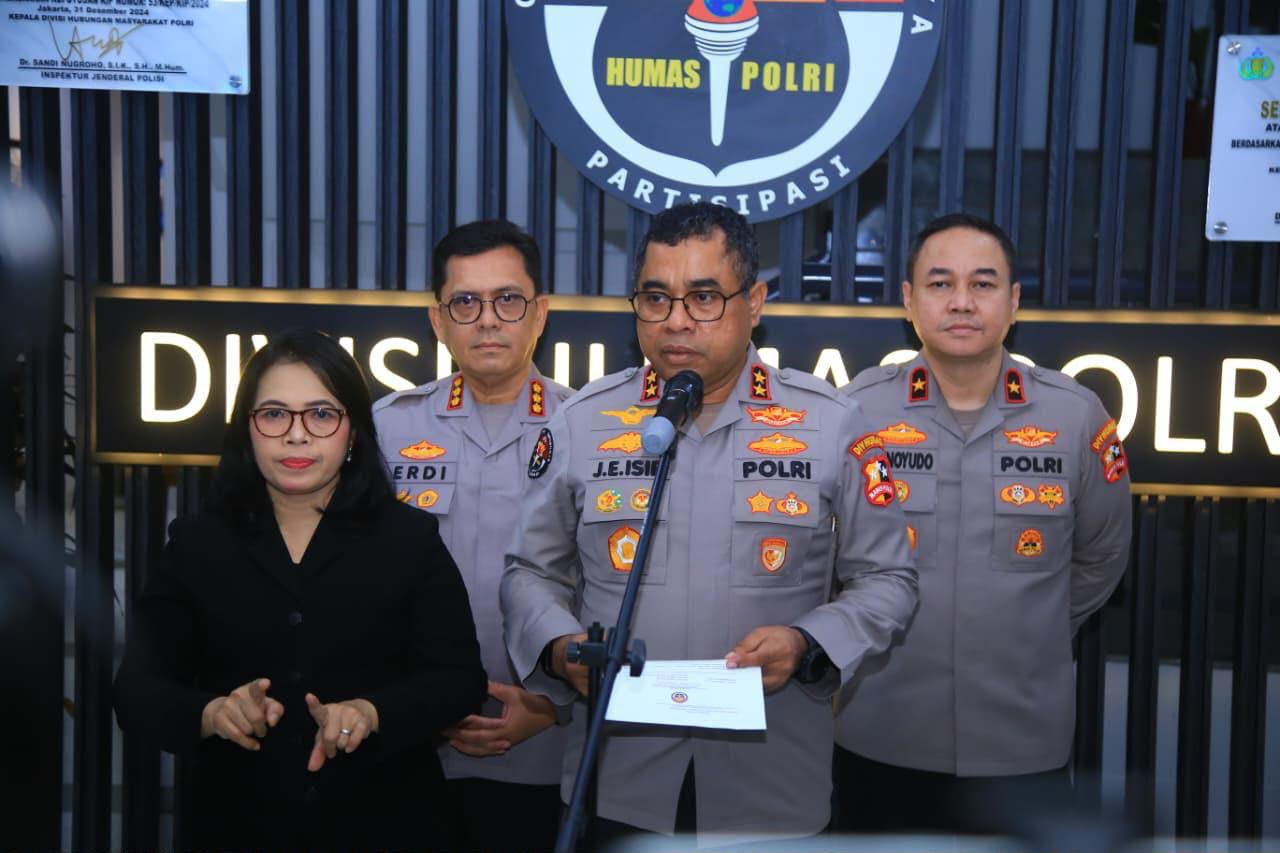
JAKARTA, 25 Agustus 2026 — Polri terus memperkuat dukungan penanganan kebakaran hutan dan lahan (karhutla) di sejumlah wilayah dengan menyalurkan bantuan logistik dan peralatan pendukung bagi petugas di lapangan.
Untuk Kalimantan Barat, bantuan karhutla yang dikirim dari Jakarta telah diberangkatkan melalui Bandara Soekarno-Hatta pada Selasa (25/8/2026). Bantuan tersebut meliputi 100 set masker gas dan canister, 200 tabung oksigen, serta berbagai peralatan pendukung pemadaman, seperti selang pemadam, selang hisap, pistol nozzle, connector Y, kolam air embung berkapasitas 5.000 liter, pompa robin, pompa apung, genset, dan pompa darat.
Bantuan tersebut dikirim menggunakan sejumlah penerbangan secara bertahap untuk selanjutnya diterima dan dimanfaatkan dalam mendukung penanganan karhutla di wilayah Kalimantan Barat.
Sementara itu, bantuan logistik dan tabung oksigen untuk wilayah lainnya juga terus dipersiapkan. Pengiriman dilakukan secara bertahap dengan menyesuaikan ketersediaan angkutan udara, kapasitas pengiriman, serta kebutuhan di masing-masing wilayah terdampak.
Kadiv Humas Polri Irjen Pol. Johnny Eddizon Isir mengatakan Polri memastikan dukungan logistik terus disalurkan agar penanganan karhutla di lapangan dapat berjalan secara optimal.
“Polri terus memastikan kebutuhan personel dan masyarakat di wilayah terdampak karhutla mendapat dukungan yang memadai. Bantuan dikirim secara bertahap dengan menyesuaikan ketersediaan sarana angkutan dan kondisi di lapangan, sehingga setiap bantuan dapat segera diterima oleh jajaran yang membutuhkan,” ujar Isir, Selasa (25/8/2026).
Ia menegaskan, bantuan tersebut tidak hanya ditujukan untuk mendukung kegiatan pemadaman, tetapi juga untuk menjaga keselamatan dan kesehatan petugas serta masyarakat yang terdampak asap karhutla.
“Peralatan pemadaman dan dukungan kesehatan, termasuk tabung oksigen dan masker gas, menjadi bagian dari upaya Polri untuk melindungi petugas yang bekerja di lapangan sekaligus membantu masyarakat yang terdampak,” katanya.
Polri akan terus memantau perkembangan karhutla di berbagai daerah dan menyesuaikan dukungan yang diberikan berdasarkan kebutuhan masing-masing wilayah. Pengiriman bantuan selanjutnya dilakukan secara bertahap dengan mempertimbangkan kesiapan angkutan dan prioritas kebutuhan di lapangan.
Polri juga terus bersinergi dengan pemerintah daerah, TNI, stakeholder terkait, serta seluruh unsur penanggulangan bencana untuk mempercepat penanganan karhutla dan memastikan keselamatan masyarakat tetap menjadi prioritas.
MANGGARAI – Bagi warga yang masih bertahan di pengungsian pascagempa, sebotol air minum bukan sekadar pelepas dahaga. Di tengah keterbatasan, air bersih menjadi kebutuhan sederhana yang begitu berarti untuk menjaga kesehatan dan memenuhi kebutuhan sehari-hari.
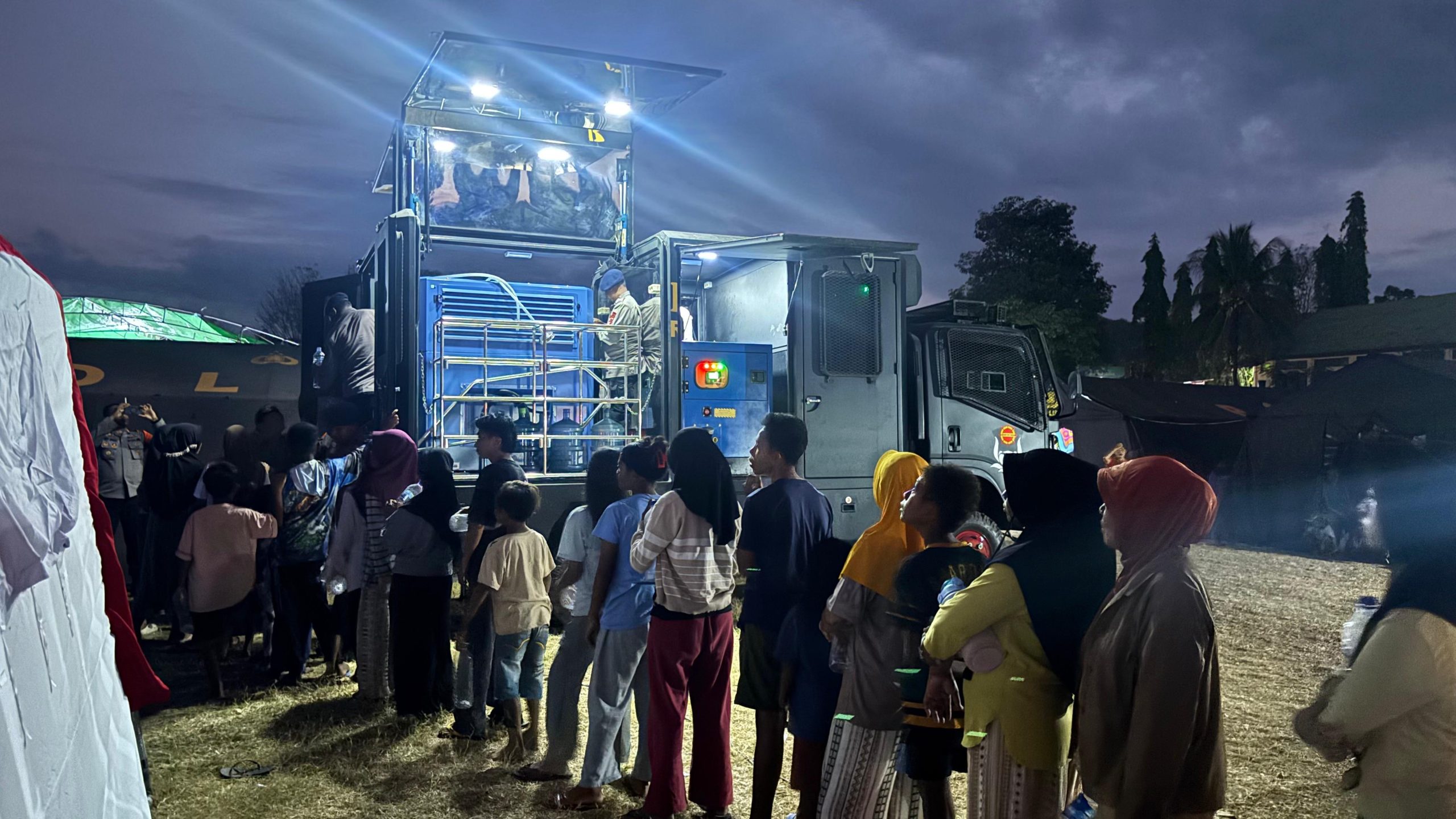
Suasana itulah yang terlihat di Posko Pengungsian Barangkolong, Desa Mata Air, Kecamatan Reok, Kabupaten Manggarai, Senin (24/8/2026) sore. Korps Brimob Polri melalui Satgas SAR BKO Polda NTT hadir membawa kendaraan khusus Watergen untuk membantu memenuhi kebutuhan air minum warga.
Sejak pukul 17.00 hingga 18.45 WITA, sebanyak 10 personel Satgas SAR Korbrimob yang dipimpin Komandan Kontingen Tugas (Dankigas) AKP Roy Ronaldo Dansu menyalurkan air minum kepada warga pengungsi.
Menggunakan kendaraan khusus (ransus) Watergen, personel berhasil menghasilkan dan mendistribusikan 200 liter air siap minum. Sebanyak 150 warga menerima manfaat dari layanan tersebut, dengan masing-masing memperoleh sekitar 1 hingga 1,5 liter air untuk memenuhi kebutuhan konsumsi selama berada di pengungsian.
AKP Roy Ronaldo Dansu mengatakan, penyaluran air minum tersebut merupakan bentuk kepedulian dan respons cepat personel Brimob dalam memastikan kebutuhan dasar warga tetap terpenuhi selama masa tanggap darurat.
“Kami berupaya hadir di tengah masyarakat untuk memastikan kebutuhan paling vital, khususnya air minum yang higienis dan layak konsumsi, senantiasa tersedia,” ungkap AKP Roy di lokasi pengungsian.
Senada dengan itu, Komandan Satgas SAR Korbrimob Polri BKO Polda NTT Kombes Pol Hasripuddin menegaskan bahwa pemenuhan kebutuhan dasar masyarakat menjadi salah satu perhatian utama personel selama berada di wilayah terdampak gempa.
“Di tengah situasi seperti ini, kami tidak hanya fokus pada evakuasi, tetapi juga memastikan kebutuhan dasar masyarakat terpenuhi. Air minum merupakan kebutuhan utama yang harus tersedia bagi warga selama berada di pengungsian,” ujar Kombes Pol Hasripuddin.
Menurutnya, keberadaan kendaraan Watergen menjadi salah satu upaya Brimob untuk memberikan pelayanan yang cepat dan tepat sasaran kepada masyarakat.
“Kami akan terus bergerak dan berkoordinasi dengan seluruh pihak untuk memberikan bantuan sesuai kebutuhan warga. Prinsipnya, selama masyarakat masih membutuhkan, personel akan terus hadir dan memberikan pelayanan terbaik,” tambahnya.
Kehadiran personel Brimob bersama kendaraan Watergen disambut antusias oleh warga. Senyum dan ucapan terima kasih menjadi bentuk apresiasi atas kepedulian yang diberikan di tengah kondisi pengungsian.
-
 Berita3 tahun ago
Anggota Polsek Pohjentrek Rutin Patroli SPBU Serta Memberikan Himbauan ke Pembeli dan Petugas
-
 Berita4 tahun ago
Ajak Anggotanya Tingkatkan Harkamtibmas, Kapolsek Purworejo Gelar Coffe Morning
-
 Berita4 tahun ago
Langkah Kompolnas dan Divisi Humas Polri Bangun Sinergitas Berikan Pelayanan Terbaik Kepada Masyarakat
-
 Berita3 tahun ago
Jelang Libur Nataru, Polres Probolinggo Pastikan Keamanan dan Kenyamanan Obyek Wisata
-
 Berita2 tahun ago
Bhabinkamtibmas Polsek Purworejo Lakukan Pengamanan Jalan Santai Peringatan HUT Ke-79 Republik Indonesia
-
 Berita3 tahun ago
Polsek Grati Patroli Antisipasi Kamtibmas Jelang Idul Fitri
-
 Berita3 tahun ago
Dengan Sinergitas, Polres Pasuruan Kota Sukseskan Pengamanan Tour de Pasuruan dan Suropati Race IV 2023
-
 Berita3 tahun ago
Bhabinkamtibmas Polsek Grati Dialogis Dengan Masyarakat Desa Binaan Ciptakan Keamanan