
Berita
Himbau Masyarakat Tetap Prokes, Tim Pamor Keris Bagikan Masker


Polresta Pasuruan – Melalui Patroli Bermotor Penegakan Protokol Kesehatan (Pamor Keris) Polres Pasuruan Kota menghimbau masyarakat Kota Pasuruan untuk disiplin dalam menerapkan protokol kesehatan serta menjaga kondusifitas situasi kamtibmas di wilayah hukum Polres Pasuruan Kota.
Pimpin langsung kegiatan Pamor Keris Kasat Samapta IPTU Kokoh Rahmadi, SH. bersama personil, pelaksanaan patroli menyasar ditempat – tempat keramaian seperti Pasar, pertokoan, dan pusat keramaian yang ada diwilayah Kota Pasuruan.
“Kegiatan Pamor Keris ini tetap kami galakkan sebagai upaya mendukung program pemerintah untuk mencegah penularan virus covid-19 khususnya di wilayah Kota Pasuruan.” terang Kasat Samapta, Jumat (13/1/2023)
Saat pelaksanaan patroli petugas menyasar kerumunan masyarakat memberikan himbauan agar mematuhi protokol kesehatan menjaga jarak dan membagikan masker gratis kepada masyarakat yang kedapatan tidak menggunakan masker.
“Dengan membagikan masker gratis ini diharapkan dapat mengedukasi masyarakat untuk tetap menggunakan masker dan mematuni protokol kesehatan saat menjalankan aktivitas sehari-hari.” Sambung Kasat Samapta.
Selain penegakan prokes, hadirnya tim Pamor Keris ini diharapkan dapat meciptakan situasi kamtibmas yang aman dan kondusif di wilayah hukum Polres Pasukan Kota
”Adanya kegiatan patroli yang laksanakan Tim Pamor Keris ini juga sebagai upaya preventif untuk menciptakan situasi kamtibmas yang aman dan kondusif.” Pungkas Kasat Samapta.

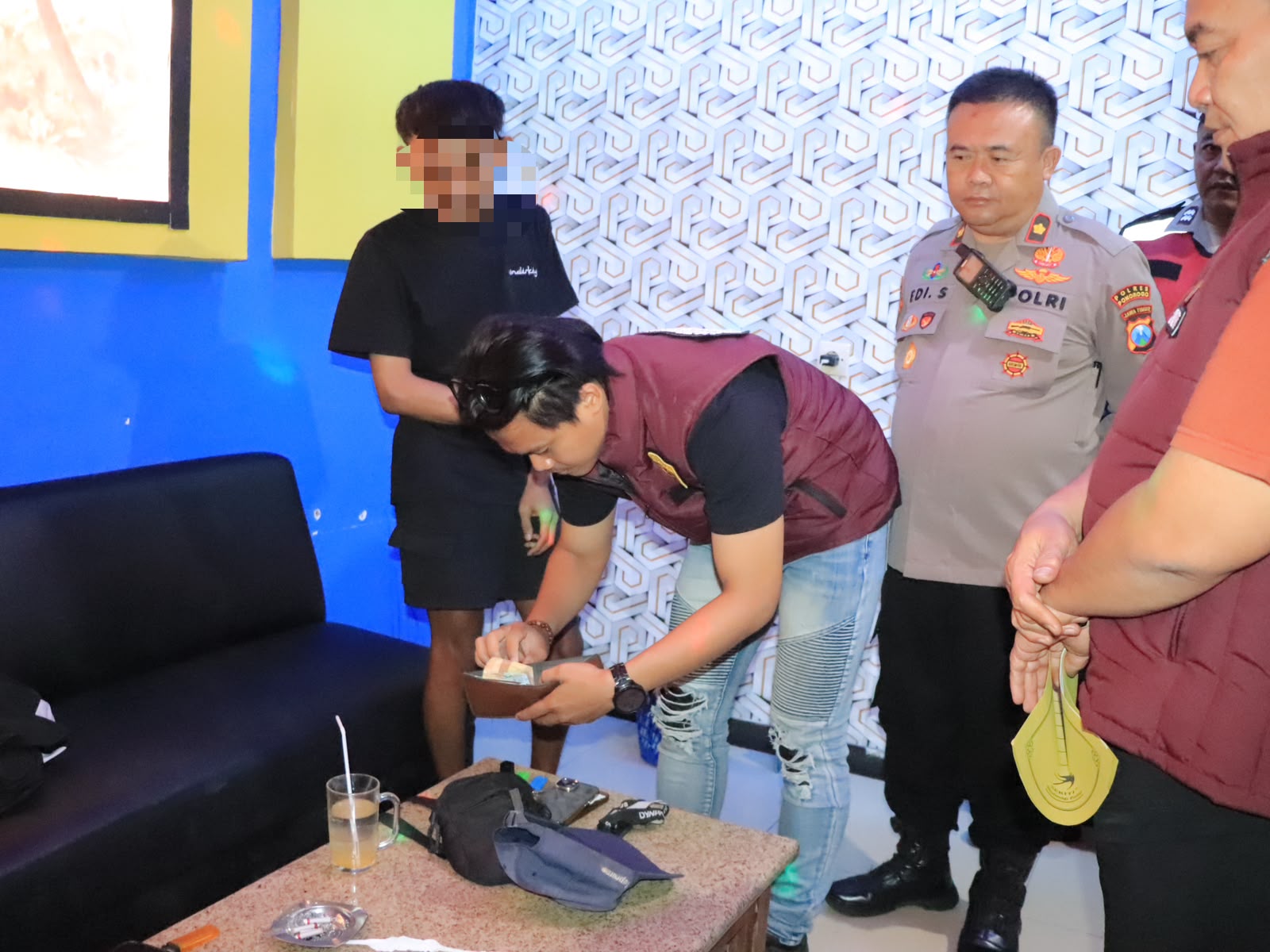
PONOROGO – Jajaran Polres Ponorogo Polda Jawa Timur memperketat pengawasan terhadap aktivitas tempat hiburan malam (THM) di wilayah Kabupaten Ponorogo.
Langkah preventif ini diwujudkan melalui razia gabungan berskala besar yang menyasar sejumlah THM di kawasan perkotaan Ponorogo pada akhir pekan ini.
Kapolres Ponorogo, AKBP Andin Wisnu Sudibyo, S.I.K., M.H melalui Kabagops Polres Ponorogo Kompol Edi Suyono menyampaikan, kegiatan tersebut merupakan bagian dari rangkaian penegakan hukum pada Operasi Tumpas Narkoba Semeru 2026.
Kompol Edi Suyono mengatakan,operasi ini difokuskan pada pemeriksaan identitas, pemeriksaan barang bawaan, serta deteksi dini penggunaan zat terlarang.
“THM menjadi salah satu titik fokus kami untuk memastikan tidak ada ruang bagi peredaran barang haram tersebut di wilayah Ponorogo,” kata Kompol Edi Suyono, Senin (24/8/2026).
Pada operasi tersebut, petugas gabungan menyisir satu per satu room karaoke, pub, dan tempat ketangkasan untuk memeriksa para pengunjung serta pemandu lagu (LC).
Sementara itu, Kasatresnarkoba Polres Ponorogo,AKP Eka Supriyadi mengatakan selain memeriksa barang bawaan pengunjung maupun pekerja THM, pihaknya juga melakukan tes Urine di tempat.
AKP Eka menegaskan Operasi Tumpas Semeru 2026 ini juga menyasar peredaran gelap narkoba, psikotropika, dan obat-obatan terlarang lainnya.
“Kami juga melaksanakan pengecekan urine secara acak di lokasi untuk memastikan tidak ada penyalahgunaan obat terlarang,” terang AKP Eka Supriyadi
Dari hasil pemeriksaan intensif dan tes urine yang dilakukan terhadap puluhan pengunjung malam itu, petugas tidak menemukan adanya barang bukti narkotika.
“Ada lebih kurang 19 orang kami lakukan tes urine, hasil tes urine para pengunjung dan pekerja di THM yang diperiksa menunjukkan negatif atau tidak terindikasi memakai narkotika,” ungkap AKP Eka.
Meskipun tidak ditemukan pelanggaran signifikan dalam razia kali ini, Kasatresnarkoba Polres Ponorogo menegaskan tidak akan mengendurkan pengawasan.
“Polres Ponorogo berkomitmen untuk terus menggelar operasi serupa secara acak dan berkala selama pelaksanaan Operasi Tumpas Semeru 2026 berlangsung,” tegas AKP Eka.
Selain melakukan penindakan, petugas di lapangan juga memberikan edukasi dan imbauan kepada pengelola THM agar memperketat pengawasan internal.
Masyarakat juga diminta untuk segera melapor ke call center 110 bebas pulsa jika menemukan pengunjung yang membawa atau mengonsumsi narkoba di dalam area hiburan.
“Partisipasi masyarakat sangat penting demi mewujudkan wilayah Ponorogo yang aman, kondusif, dan bersih dari narkoba,” pungkas AKP Eka. (*)
Berita
Polri Kirim Bantuan Logistik dan Oksigen untuk Dukung Penanganan Karhutla di Sejumlah Wilayah

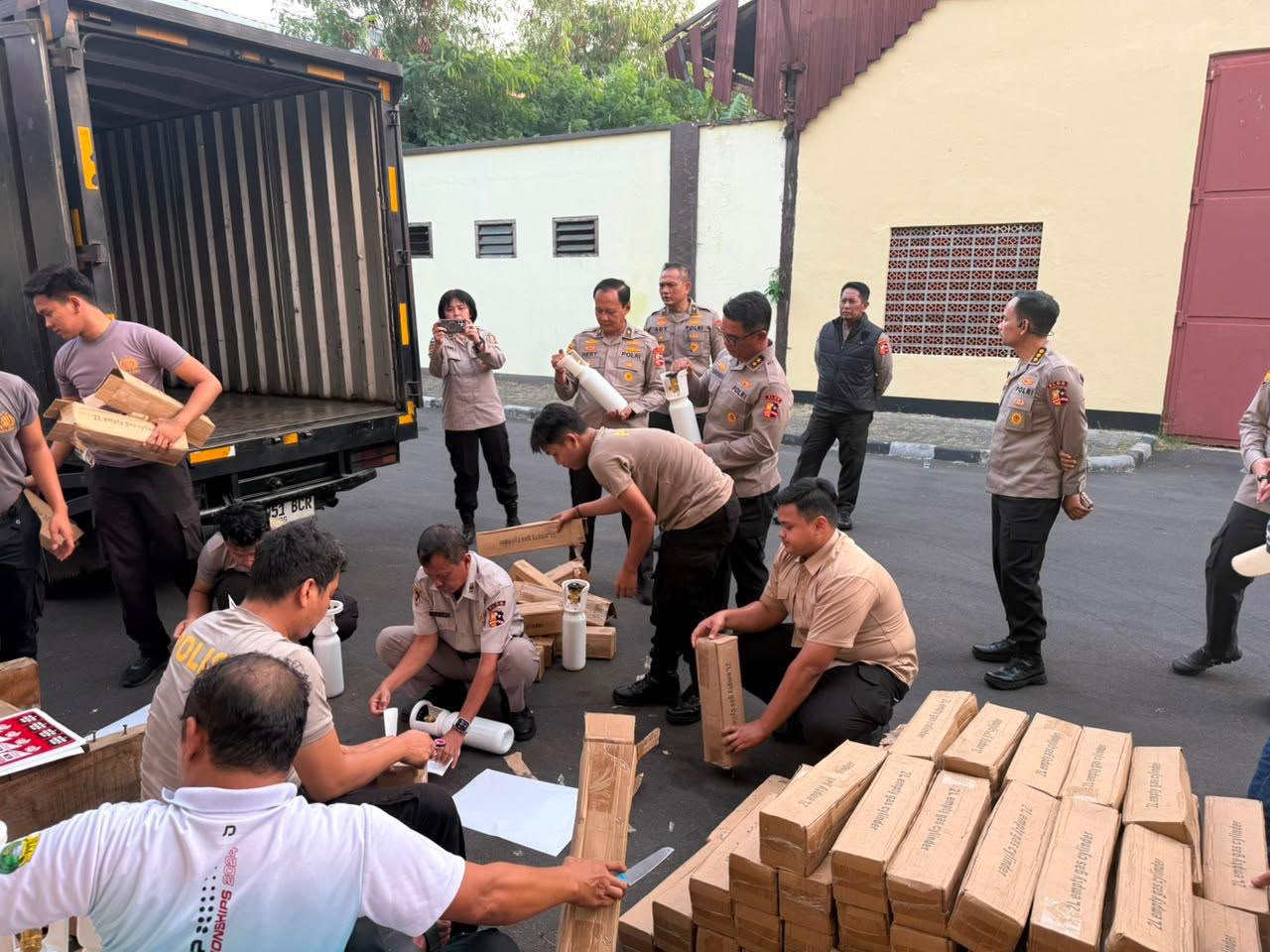
Jakarta, 24 Agustus 2026 – Polri melalui Satuan Logistik (Slog) Polri terus memperkuat dukungan terhadap penanganan kebakaran hutan dan lahan (karhutla) di sejumlah wilayah dengan menyiapkan bantuan logistik, peralatan pemadaman, serta tabung oksigen bagi petugas dan masyarakat terdampak.
Sebagai tahap awal, pada Senin (24/8/2026), bantuan untuk Kalimantan Barat mulai diberangkatkan. Bantuan tersebut terdiri atas 6 set tenda pleton, 200 dus MTP, selang pemadam kebakaran hutan ukuran 1,5 inci dan 2,5 inci, gun nozzle pistol spray, nozzle, connector Y, serta tabung oksigen berukuran besar dan kecil.
Bantuan tersebut selanjutnya dijadwalkan diberangkatkan melalui Bandara Soekarno-Hatta pada Selasa (25/8/2026) pukul 06.30 WIB menggunakan pesawat untuk mendukung kebutuhan petugas di lapangan dalam penanganan karhutla.
Sementara itu, Polri juga telah menyiapkan dukungan logistik dan tabung oksigen untuk sejumlah wilayah lain yang terdampak karhutla. Sebanyak 1.500 tabung oksigen disiapkan untuk didistribusikan ke Kalimantan Barat 200 tabung, Kalimantan Tengah 250 tabung, Kalimantan Selatan 200 tabung, Sumatera Selatan 200 tabung, Riau 250 tabung, dan Jambi 150 tabung.
Karo Penmas Divhumas Polri Brigjen Pol. Trunoyudo Wisnu Andiko dalam keterangannya di Jakarta, Senin (24/8/2026), mengatakan pengiriman bantuan dilakukan secara bertahap dengan mempertimbangkan kebutuhan dan kesiapan pengangkutan menuju masing-masing wilayah terdampak.
“Untuk tahap awal, bantuan yang diberangkatkan adalah untuk mendukung penanganan karhutla di Kalimantan Barat. Sementara bantuan untuk wilayah lainnya juga terus kami siapkan dan akan dikirimkan secepatnya secara bertahap sesuai kesiapan pengangkutan dan kebutuhan di lapangan,” ujar Trunoyudo.
Ia menambahkan, bantuan tersebut ditujukan tidak hanya untuk mendukung petugas yang melaksanakan pemadaman, tetapi juga membantu masyarakat yang terdampak, khususnya mereka yang mengalami gangguan pernapasan akibat paparan asap karhutla.
“Dukungan logistik ini merupakan bagian dari upaya Polri untuk memastikan petugas memiliki perlengkapan yang memadai dalam melaksanakan pemadaman, sekaligus memberikan dukungan kepada masyarakat di wilayah terdampak,” katanya.
Polri akan terus memantau perkembangan penanganan karhutla di berbagai wilayah dan memastikan dukungan personel maupun logistik dapat disalurkan secara cepat sesuai kebutuhan di lapangan. Dalam pelaksanaannya, Polri juga terus bersinergi dengan seluruh pihak terkait untuk mempercepat penanganan karhutla serta melindungi keselamatan petugas dan masyarakat.
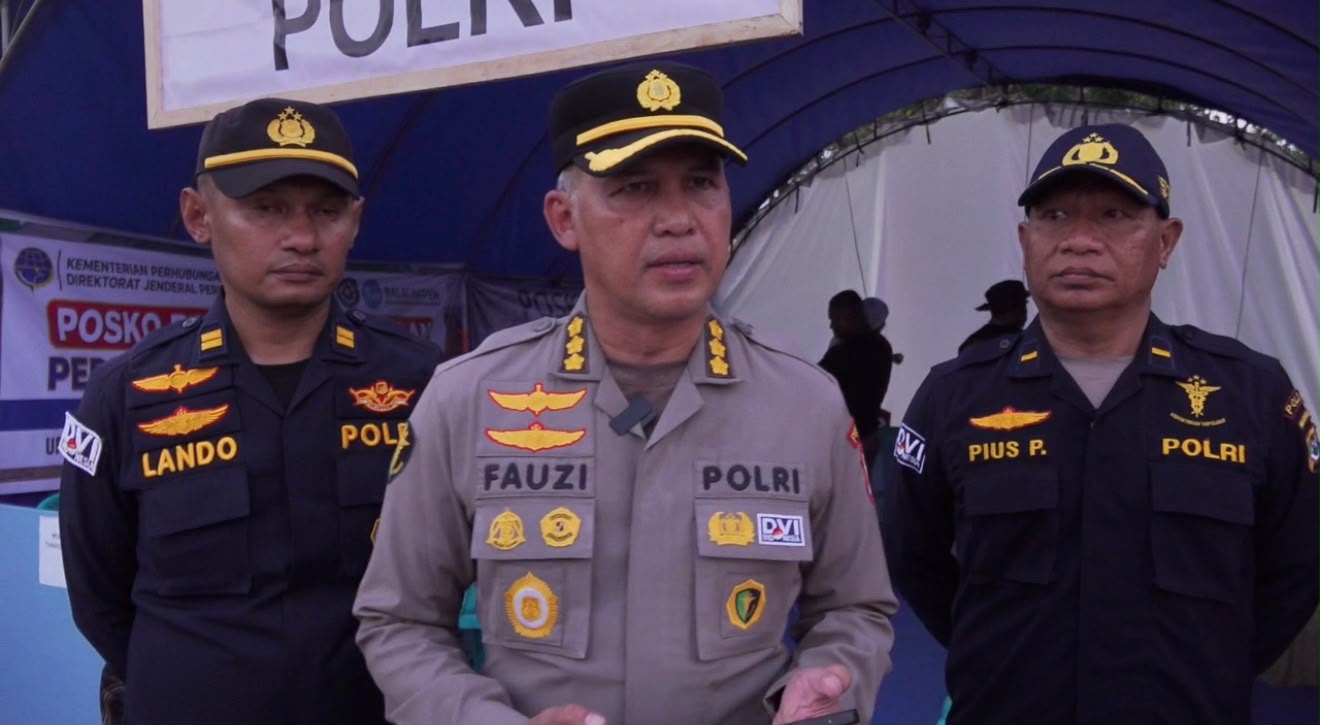
NAGEKEO, NTT — Polri terus memberikan pelayanan kesehatan kepada masyarakat terdampak gempa bumi di Nusa Tenggara Timur. Melalui Posko Kesehatan Polri di Kabupaten Nagekeo, ratusan warga telah mendapatkan pemeriksaan dan penanganan medis selama masa pemulihan pascabencana.
Hingga 24 Agustus 2026, Posko Kesehatan Polri telah melayani kurang lebih 400 warga dengan berbagai keluhan kesehatan. Keluhan yang ditemukan antara lain Infeksi Saluran Pernapasan Akut (ISPA), gastritis, flu, hingga batuk.
Ketua Tim Kesehatan Pusdokkes Polri Kombes Pol drg. Ahmad Fauzi mengatakan, setiap warga yang datang mendapatkan pemeriksaan dan penanganan sesuai dengan kondisi kesehatan masing-masing.
“Sampai dengan 24 Agustus, kurang lebih 400 warga sudah mendapatkan pelayanan kesehatan di posko. Keluhan yang kami temukan cukup beragam, seperti ISPA, gastritis, flu dan batuk. Kami lakukan pemeriksaan dan penanganan sesuai dengan kondisi masing-masing pasien,” ujar Kombes Pol drg. Ahmad Fauzi dalam Keterangannya, Senin (24/08).
Menurutnya, kondisi kesehatan warga yang sebelumnya mengalami berbagai keluhan tersebut secara umum sudah membaik setelah mendapatkan pelayanan dan pengobatan dari tim medis Polri.
“Alhamdulillah, sebagian besar keluhan yang dialami masyarakat sudah teratasi. Kami terus melakukan pemantauan dan memberikan pelayanan apabila masih ada masyarakat yang membutuhkan pemeriksaan maupun pengobatan,” katanya.
Selain memberikan pengobatan, keberadaan Posko Kesehatan Polri juga menjadi bagian dari upaya memastikan masyarakat terdampak gempa tetap mendapatkan akses layanan kesehatan selama berada dalam masa pemulihan.
Pelayanan tersebut diberikan secara langsung kepada warga dengan mengedepankan kebutuhan dan kondisi masyarakat di lapangan. Tim medis Polri juga terus berkoordinasi dengan unsur terkait untuk memastikan pelayanan kesehatan dapat berjalan secara berkelanjutan.
“Kami akan terus hadir selama masyarakat masih membutuhkan pelayanan kesehatan. Harapannya, masyarakat dapat melewati masa pemulihan ini dengan kondisi yang semakin sehat dan kuat,” tutur Ahmad Fauzi.
Kehadiran Posko Kesehatan Polri menjadi salah satu bentuk nyata pelayanan kemanusiaan Polri di tengah masyarakat terdampak bencana. Tidak hanya membantu mengatasi keluhan kesehatan, pelayanan tersebut juga menjadi bagian dari upaya memberikan rasa aman dan memastikan warga tidak kesulitan memperoleh pertolongan medis pascagempa.
-
 Berita3 tahun ago
Anggota Polsek Pohjentrek Rutin Patroli SPBU Serta Memberikan Himbauan ke Pembeli dan Petugas
-
 Berita4 tahun ago
Ajak Anggotanya Tingkatkan Harkamtibmas, Kapolsek Purworejo Gelar Coffe Morning
-
 Berita4 tahun ago
Langkah Kompolnas dan Divisi Humas Polri Bangun Sinergitas Berikan Pelayanan Terbaik Kepada Masyarakat
-
 Berita3 tahun ago
Jelang Libur Nataru, Polres Probolinggo Pastikan Keamanan dan Kenyamanan Obyek Wisata
-
 Berita2 tahun ago
Bhabinkamtibmas Polsek Purworejo Lakukan Pengamanan Jalan Santai Peringatan HUT Ke-79 Republik Indonesia
-
 Berita3 tahun ago
Polsek Grati Patroli Antisipasi Kamtibmas Jelang Idul Fitri
-
 Berita3 tahun ago
Dengan Sinergitas, Polres Pasuruan Kota Sukseskan Pengamanan Tour de Pasuruan dan Suropati Race IV 2023
-
 Berita3 tahun ago
Bhabinkamtibmas Polsek Grati Dialogis Dengan Masyarakat Desa Binaan Ciptakan Keamanan